
OX Security vs Cycode: A Complete Comparison Guide for 2026
Picking the right application security platform can make or break your development workflow. Two names come up often in conversations about AppSec and software supply chain protection: OX Security and Cycode. Both promise to secure your code from creation to cloud deployment. Both claim strong prioritization and visibility features. But they’re not the same product, and the differences matter.
In this comparison, we’ll break down how OX Security and Cycode handle everything from code scanning to runtime risk assessment. We’ll look at their approaches to AI-generated code, secret detection, pipeline security, and much more. By the end, you’ll have a clear picture of which platform fits your team’s needs. Let’s get into it.
Understanding Application Security Posture Management: Why It Matters
Before we compare OX Security and Cycode head-to-head, let’s talk about what these tools actually do. Both fall into a category called Application Security Posture Management, or ASPM. This isn’t just another security buzzword. It’s a real shift in how companies protect their software.
What ASPM Actually Does
Traditional security tools worked in silos. You had one tool for static analysis, another for secrets detection, another for container scanning. Each tool generated its own alerts. Security teams drowned in notifications. Most alerts turned out to be false positives or low-priority issues that would never actually get exploited.
ASPM platforms like OX Security and Cycode aim to fix this fragmentation. They pull security data from across your entire software development lifecycle. They correlate findings. They prioritize based on real risk, not theoretical vulnerability scores.
Here’s what a good ASPM platform should give you:
- Full visibility into your code, dependencies, containers, and infrastructure
- Correlation between different security findings
- Prioritization based on actual exploitability and business impact
- Remediation guidance that developers can actually use
- Code-to-cloud traceability so you know where vulnerabilities end up in production
Both OX Security and Cycode check these boxes. But they approach each capability differently. The details matter when you’re securing hundreds of repositories and dealing with thousands of potential vulnerabilities.
The Problem Both Platforms Solve
Security teams face a tough reality. Development velocity has exploded. Teams ship code multiple times per day. AI coding assistants generate thousands of lines of code in minutes. Meanwhile, attackers have gotten smarter about targeting software supply chains.
The old approach of scanning code once before release doesn’t work anymore. You need continuous security monitoring. You need context about what’s actually running in production versus what’s sitting unused in a repository. You need to know which vulnerabilities attackers could actually reach.
This is where OX Security and Cycode come in. They promise to give security teams the visibility and prioritization they need without slowing down developers. But each platform has its own philosophy about how to achieve this goal.
OX Security Overview: Platform Architecture and Core Philosophy
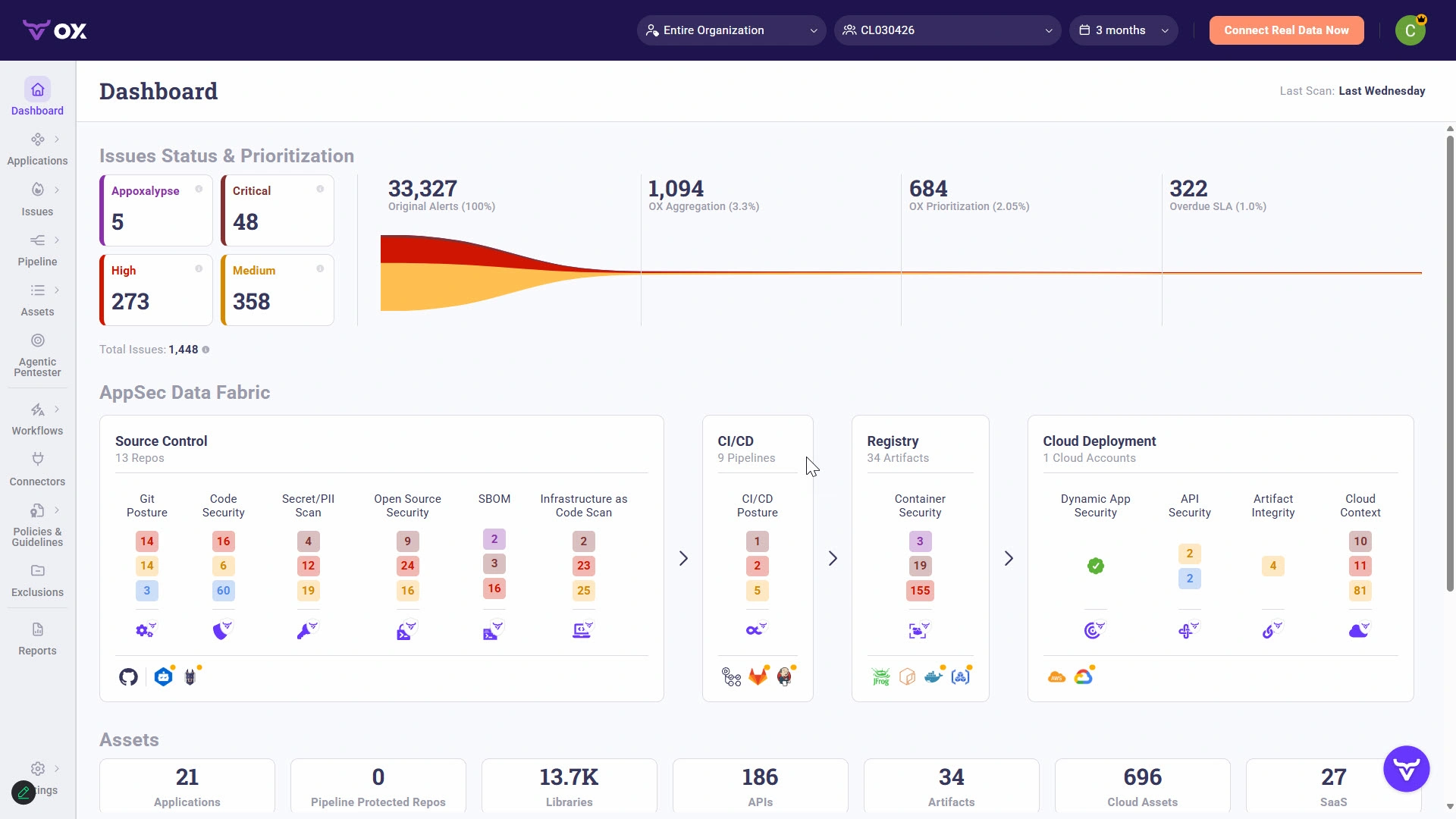
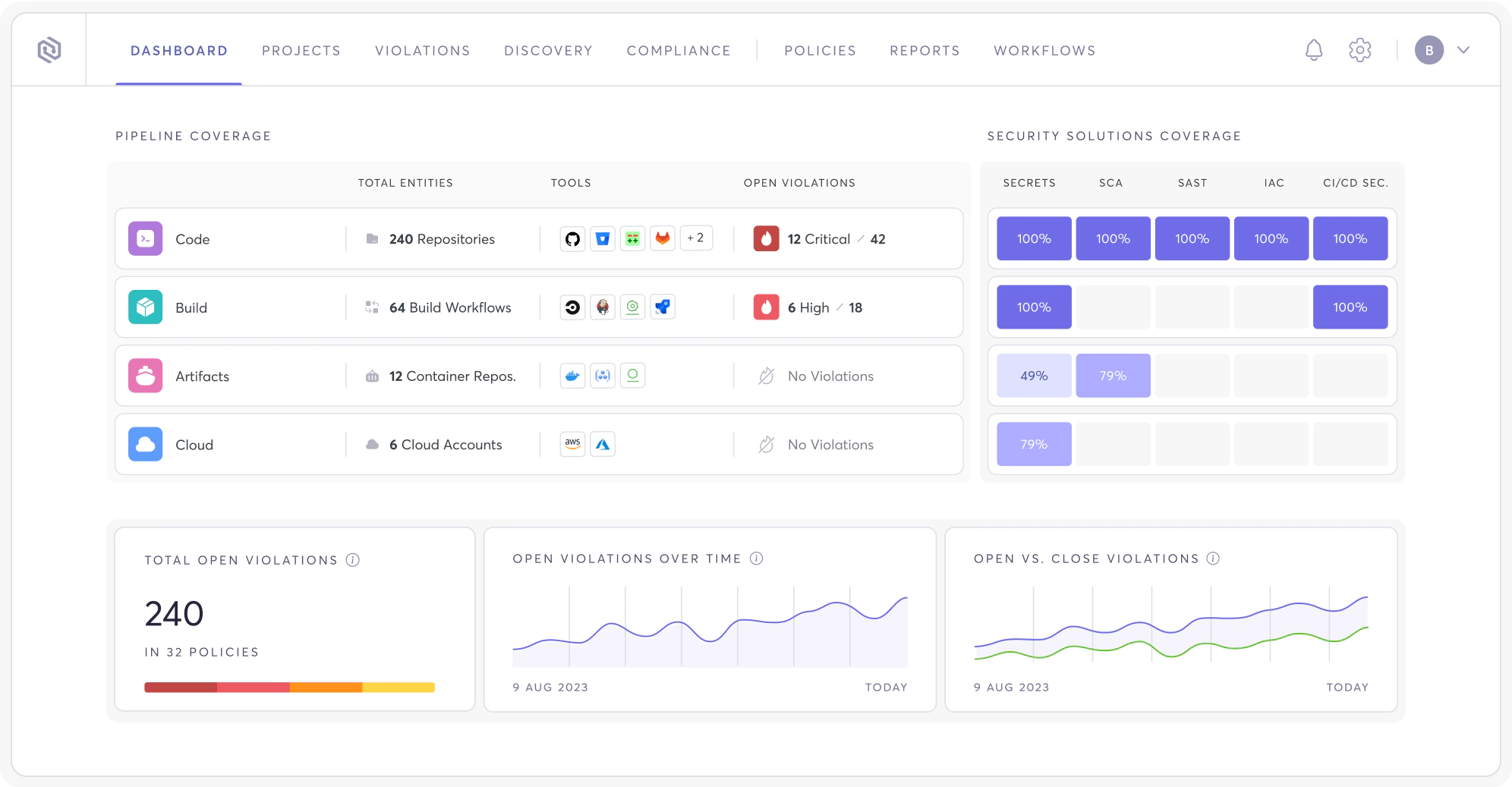
OX Security positions itself as a unified application security platform that covers AI-generated code all the way to cloud runtime. The company emphasizes what it calls “code-to-cloud traceability” and uses a technology called PBOM (Pipeline Bill of Materials) to track exactly how code flows through your development pipeline.
Key Capabilities of OX Security
OX Security offers native scanning capabilities across multiple security domains. Unlike some ASPM platforms that only aggregate data from other tools, OX performs its own analysis. This gives it more control over the quality and consistency of findings.
The platform covers these major security areas:
- Static Application Security Testing (SAST) for analyzing source code
- Software Composition Analysis (SCA) for open-source dependencies
- Secrets detection for hardcoded credentials and API keys
- Container security for Docker images and Kubernetes configurations
- Infrastructure as Code (IaC) scanning for misconfigurations
- Pipeline security for CI/CD workflow protection
- AI code security through what they call “Vibe Security”
One thing that sets OX Security apart is its focus on AI-generated code. With tools like GitHub Copilot and ChatGPT becoming standard in development workflows, OX built specific controls for securing code that AI assistants produce. The platform applies security checks in real time as AI-generated code enters your codebase.
OX Security’s Approach to Risk Prioritization
Generating a list of vulnerabilities is easy. Any scanner can do that. The hard part is figuring out which vulnerabilities actually matter. OX Security tackles this with what they call deterministic code-to-cloud traceability.
Here’s how it works. The platform tracks every piece of code from its origin through build, deployment, and runtime. It knows which functions are actually called in production. It knows which containers are actually running. It knows which API endpoints are exposed to the internet.
This context lets OX reduce false positives dramatically. A vulnerability in code that never executes isn’t a real risk. A vulnerability in a library function that’s never called isn’t exploitable. OX filters these out so security teams can focus on issues that could actually be attacked.
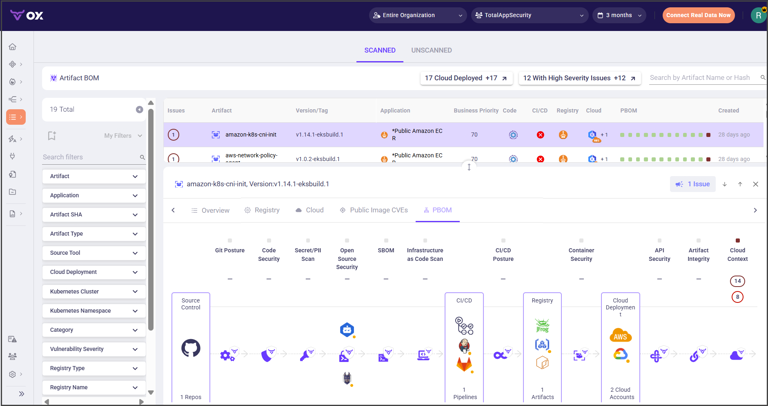
The PBOM technology plays a big role here. Traditional SBOMs (Software Bills of Materials) list your dependencies. The Pipeline Bill of Materials goes further. It captures the entire journey of your code through CI/CD pipelines. This gives you forensic-level detail about how software gets built and deployed.
Vibe Security: Protecting AI-Generated Code
OX Security has invested heavily in what they call Vibe Security. This feature targets the specific risks that come with AI coding assistants. And there are plenty of risks to worry about.
AI code generators can introduce vulnerable patterns that human developers would avoid. They might suggest outdated cryptographic algorithms. They might generate code with injection vulnerabilities. They don’t understand your security requirements unless you explicitly tell them.
Vibe Security applies security controls at the moment AI-generated code enters your environment. Rather than waiting for a scheduled scan, the platform catches issues immediately. This prevents vulnerable AI code from ever making it into a pull request.
For teams adopting AI coding tools heavily, this feature alone might justify choosing OX Security over alternatives that don’t address AI code risks specifically.
Cycode Overview: Platform Architecture and Core Philosophy
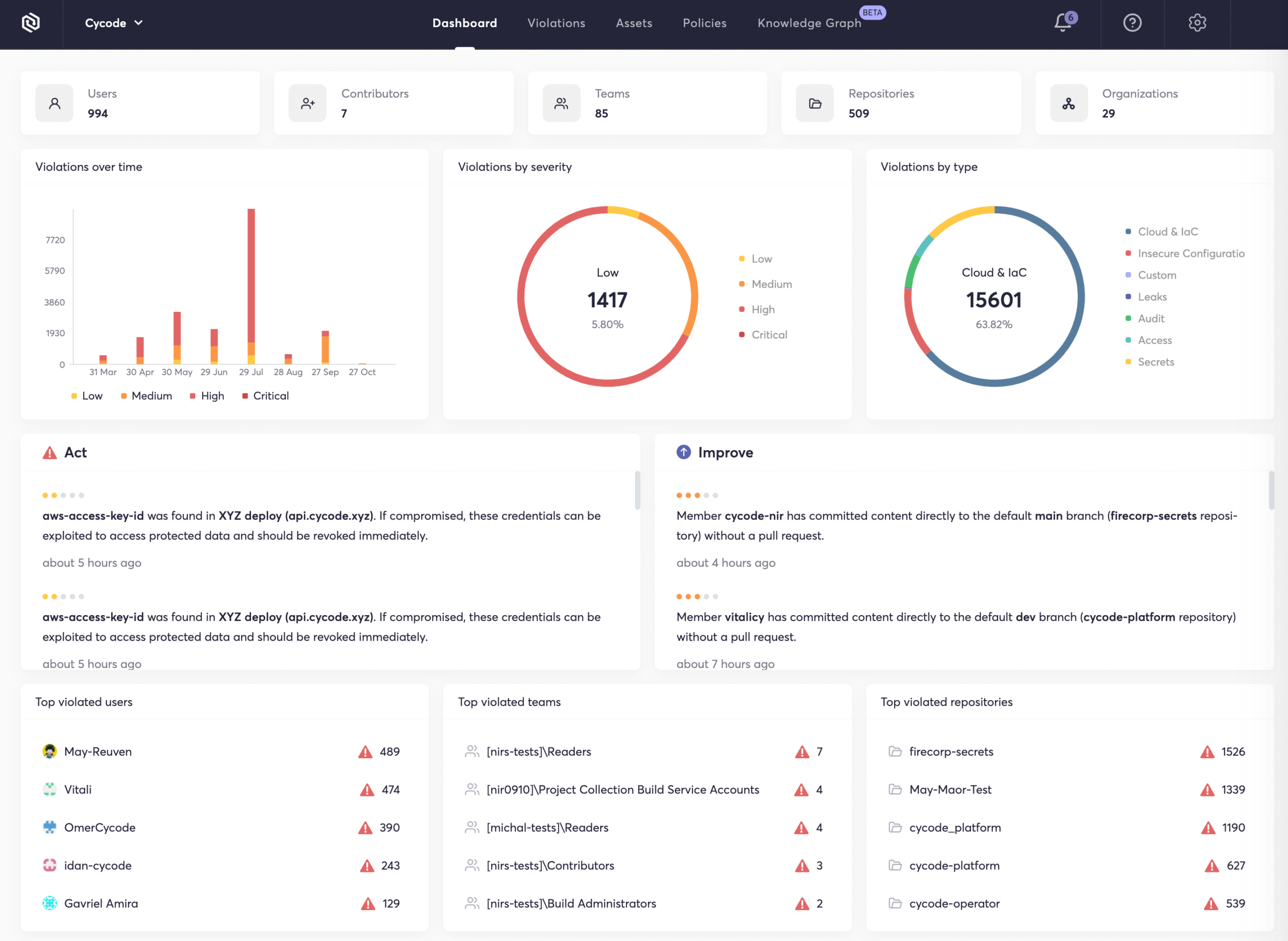
Cycode describes itself as a security-first, developer-friendly AppSec platform. The company emphasizes complete code-to-cloud coverage and positions its ASPM capabilities as built-in rather than bolted-on. Cycode aims to eliminate context switching for security teams while maintaining the speed developers need.
Key Capabilities of Cycode
Cycode offers comprehensive coverage across the software development lifecycle. Like OX Security, it provides native scanning rather than just aggregating third-party tool results. The platform handles:
- Static Application Security Testing (SAST) for source code analysis
- Software Composition Analysis (SCA) for dependency vulnerabilities
- Secrets detection with a focus on preventing leakage
- Container security for image and orchestration issues
- Pipeline security for CI/CD protection
- Application risk management across your portfolio
- Code governance for policy enforcement
Cycode places strong emphasis on its developer-friendly approach. The platform integrates directly into developer workflows. It provides remediation guidance in the tools developers already use. The goal is to make security a natural part of development rather than a separate process that slows things down.
Risk Intelligence Graph: Cycode’s Prioritization Engine
Cycode’s approach to prioritization centers on what they call the Risk Intelligence Graph, or RIG. This technology creates a map of relationships across your codebase, dependencies, pipelines, and cloud infrastructure.
The Risk Intelligence Graph connects the dots between different security findings. A vulnerability in a library gets linked to every application using that library. An exposed secret gets traced to the services it can access. A misconfigured pipeline gets connected to the sensitive code it deploys.
This correlation helps security teams understand the real scope of issues. A single vulnerability might affect dozens of applications. A compromised credential might unlock access to multiple production systems. The RIG shows these relationships so you can prioritize based on actual blast radius.
Like OX Security, Cycode provides code-to-cloud traceability. You can track how vulnerabilities flow from source code through build processes into running applications. This helps answer the critical question: is this vulnerability actually in production, or just sitting in a test branch?
Developer Experience Focus
Cycode puts significant effort into the developer experience. The platform integrates with popular IDEs, code repositories, and CI/CD tools. Developers get security feedback where they already work rather than in a separate security dashboard they have to check.
Remediation guidance is another strong point. When Cycode finds an issue, it doesn’t just report the problem. It tells developers how to fix it. For dependency vulnerabilities, it might suggest specific version upgrades. For code issues, it might provide fix examples.
This focus on developer experience matters for adoption. Security tools that developers hate don’t get used. Tools that slow down builds get bypassed. Cycode tries to avoid these traps by making security feedback fast and actionable.
Feature-by-Feature Comparison: OX Security vs Cycode
Now let’s put these platforms side by side. We’ll compare specific capabilities so you can see exactly where each platform shines and where it falls short.
Code Scanning Capabilities Compared
| Capability | OX Security | Cycode |
|---|---|---|
| SAST (Static Analysis) | Native scanning engine | Native scanning engine |
| SCA (Dependency Analysis) | Native with PBOM context | Native with RIG correlation |
| Secrets Detection | Built-in scanning | Built-in with leakage prevention |
| Container Scanning | Native container analysis | Native container analysis |
| IaC Scanning | Configuration analysis | Configuration analysis |
| AI Code Security | Vibe Security (dedicated feature) | General scanning applies |
| Language Support | Broad coverage | Broad coverage |
Both platforms offer native scanning across major security categories. The biggest difference here is OX Security’s dedicated AI code security feature. If your team generates a lot of code with AI assistants, this matters. Cycode’s scanners will catch vulnerabilities in AI-generated code, but they don’t provide the same real-time, AI-specific controls that OX offers.
On secrets detection, Cycode emphasizes leakage prevention. This means catching secrets before they get committed to repositories, not just finding them after the fact. Both platforms detect secrets, but Cycode’s marketing emphasizes this preventive angle more strongly.
Prioritization and Risk Assessment
| Feature | OX Security | Cycode |
|---|---|---|
| Prioritization Method | PBOM with code-to-cloud traceability | Risk Intelligence Graph (RIG) |
| False Positive Reduction | Runtime relevance filtering | Correlation-based filtering |
| Reachability Analysis | Proves real, reachable risks | Code-to-cloud traceability |
| Business Context | Application criticality factored | Application criticality factored |
| Vulnerability Correlation | Cross-repository linking | RIG relationship mapping |
Both platforms tackle the false positive problem. OX Security emphasizes proving that risks are “real and reachable” using runtime context. Cycode uses its Risk Intelligence Graph to correlate findings and surface truly dangerous issues.
OX Security’s PBOM approach gives detailed visibility into how code flows through pipelines. This can help with compliance and audit requirements where you need to prove exactly how software was built. Cycode’s RIG focuses more on understanding relationships and blast radius.
In practice, both approaches reduce alert fatigue. Security teams using either platform report spending less time chasing false positives than they did with traditional tools. The specific method matters less than the result.
Pipeline and Supply Chain Security
Supply chain attacks have become a major threat vector. Both OX Security and Cycode recognize this and provide pipeline protection features.
OX Security’s Pipeline Protection:
- PBOM captures complete pipeline state and history
- Tracks code provenance from commit to deployment
- Detects pipeline tampering and configuration issues
- Provides forensic data for incident response
Cycode’s Pipeline Protection:
- CI/CD security monitoring and enforcement
- Pipeline configuration analysis
- Code-to-cloud traceability for supply chain visibility
- Integration with major CI/CD platforms
OX Security’s Pipeline Bill of Materials stands out here. Traditional security tools might tell you that a vulnerable library exists in your codebase. OX’s PBOM tells you exactly which pipeline built that artifact, when it was built, what dependencies were pulled in, and where the resulting container is running.
Cycode covers pipeline security as part of its complete code-to-cloud approach. You get protection, but the documentation emphasizes the company’s ASPM and AppSec capabilities more than pipeline-specific features.
Integration Ecosystem: How Each Platform Connects
A security platform that doesn’t integrate with your existing tools creates friction. Both OX Security and Cycode offer broad integration support, but the specifics matter for your environment.
Source Code Management Integrations
Both platforms integrate with major source code management systems:
- GitHub (cloud and enterprise)
- GitLab (cloud and self-managed)
- Bitbucket (cloud and data center)
- Azure DevOps repos
Integration depth varies. Check whether each platform offers native GitHub Apps versus simple webhook integrations. Native apps provide richer functionality like inline PR comments and check run results. Webhook-based integrations work but offer less seamless experiences.
Both OX Security and Cycode can scan repositories at commit time, during pull requests, and on scheduled intervals. This flexibility lets you balance thoroughness against performance. You might run quick scans on every PR but save deep analysis for nightly builds.
CI/CD Platform Integrations
Modern development runs on CI/CD. Your security platform needs to plug into these workflows without breaking builds or slowing deployments.
Common CI/CD integrations both platforms support:
- GitHub Actions
- GitLab CI
- Jenkins
- CircleCI
- Azure Pipelines
- AWS CodePipeline
OX Security’s presence on the AWS Marketplace indicates strong AWS ecosystem integration. If your team runs heavily on AWS services, this might simplify procurement and deployment. Cycode also offers marketplace availability and broad CI/CD support.
Pipeline integration methods vary. Some platforms inject scanning steps into your existing pipelines. Others monitor pipeline activity externally. Ask vendors specifically how their integrations work and what permissions they require. Security tools that need broad write access to your CI/CD system create their own risks.
Cloud Platform and Runtime Integrations
Code-to-cloud traceability requires connecting to your cloud infrastructure. Both platforms need visibility into where your applications actually run.
| Cloud Integration | OX Security | Cycode |
|---|---|---|
| AWS | Supported (Marketplace presence) | Supported |
| Azure | Supported | Supported |
| Google Cloud | Supported | Supported |
| Kubernetes | Native container analysis | Native container analysis |
| Container Registries | Major registries supported | Major registries supported |
Runtime context is where the magic happens for risk prioritization. A platform that can see your running workloads knows which vulnerabilities are actually deployed. It can tell you if a vulnerable function is called in production versus sitting dormant in dead code.
Both OX Security and Cycode offer this runtime awareness, but implementation details differ. Some platforms require agents deployed to your infrastructure. Others work with cloud API access and don’t need runtime components. Understand the deployment model before committing.
Ticketing and Communication Integrations
Finding vulnerabilities is only half the battle. You need to get fixes assigned and tracked. Both platforms integrate with common ticketing systems:
- Jira for issue tracking
- ServiceNow for IT service management
- Slack for notifications and alerts
- Microsoft Teams for collaboration
- PagerDuty for incident response
Automatic ticket creation for critical vulnerabilities saves time. Look for customizable rules that let you control when tickets get created. You don’t want a flood of Jira issues for every minor finding. But you definitely want tickets for critical vulnerabilities that could be exploited today.
AI-Generated Code Security: A Critical Differentiator
The rise of AI coding assistants has changed software development fundamentally. GitHub Copilot, ChatGPT, Claude, and other AI tools now generate substantial portions of production code. This creates new security challenges that traditional tools weren’t designed to handle.
Why AI Code Security Matters
AI code generators are trained on massive datasets that include both secure and insecure code examples. When you ask an AI to write a function, it might produce something that works but contains subtle security flaws.
Common risks with AI-generated code include:
- Outdated security patterns from old training data
- Insecure default configurations that work but expose vulnerabilities
- Missing input validation because the AI focused on functionality
- Vulnerable dependency suggestions based on popularity rather than security
- Injection vulnerabilities in generated database queries or shell commands
Developers using AI assistants might not catch these issues. They’re moving fast. The code looks reasonable. It passes unit tests. Only later does someone discover that the AI suggested a SQL query without parameterization.
OX Security’s Vibe Security Approach
OX Security built a dedicated feature called Vibe Security specifically for AI-generated code risks. Rather than treating AI code the same as human-written code, OX applies additional controls at the point of creation.
Vibe Security works in real time. As AI-generated code enters your development environment, the platform scans it immediately. This catches vulnerabilities before they ever reach a pull request or code review. Developers get instant feedback about security issues in AI suggestions.
This approach has several advantages:
- Faster feedback while the context is fresh
- Prevents propagation of vulnerable patterns
- Educates developers about AI security risks
- Reduces remediation cost by catching issues early
For organizations adopting AI coding tools aggressively, Vibe Security addresses a real gap. Traditional scanners catch AI code vulnerabilities eventually. But “eventually” might mean after the code is merged, deployed, and running in production.
Cycode’s Approach to AI Code
Cycode’s documentation emphasizes comprehensive code coverage but doesn’t highlight AI-specific security features as prominently as OX Security does. The platform’s scanners analyze all code regardless of origin, which means AI-generated code gets scanned along with human-written code.
This approach works. Vulnerabilities in AI code will eventually be detected during regular SAST and SCA scans. But there’s no special handling for the unique characteristics of AI-generated code.
For teams that use AI coding tools moderately, this might be sufficient. For teams going all-in on AI-assisted development, OX Security’s dedicated approach may provide better coverage and faster feedback.
Comparing AI Security Capabilities
| AI Security Feature | OX Security | Cycode |
|---|---|---|
| Dedicated AI Code Feature | Yes (Vibe Security) | No specific feature |
| Real-Time AI Code Scanning | Yes, at creation time | Standard scanning applies |
| AI-Specific Risk Patterns | Targeted detection rules | General vulnerability rules |
| IDE Integration for AI Code | Catches AI suggestions early | Standard IDE integration |
| AI Code Provenance Tracking | Identifies AI-generated code | Not specifically tracked |
This comparison shows OX Security’s clear lead in AI code security. If your organization is betting heavily on AI-assisted development, this differentiator deserves serious weight in your decision.
User Experience and Workflow Integration
Security tools only work if people actually use them. Both OX Security and Cycode invest in user experience, but they emphasize different aspects.
Security Team Experience
Security teams need dashboards that show overall posture at a glance. They need the ability to drill down into specific issues. They need reporting for compliance and executive communication.
What security teams get from OX Security:
- Unified dashboard across all security domains
- PBOM-based traceability for any artifact
- Risk scoring with runtime context
- Compliance reporting capabilities
- API access for custom reporting
What security teams get from Cycode:
- Centralized visibility with no context switching
- Risk Intelligence Graph visualization
- Policy enforcement and governance
- Correlation across multiple repositories
- Audit trails and compliance support
Cycode specifically emphasizes eliminating context switching. Security teams using multiple tools constantly jump between consoles. Cycode aims to consolidate everything into one view. OX Security makes similar claims with its unified platform approach.
In evaluations, pay attention to how each platform handles large-scale environments. A dashboard that works great for 50 repositories might become unwieldy at 500. Ask vendors for demos using realistic data volumes.
Developer Experience
Developers interact with security tools differently than security teams. They want feedback in their IDE or pull request. They want clear remediation guidance. They don’t want to log into a separate security console.
Developer-facing features in OX Security:
- PR comments with vulnerability details
- IDE plugins for real-time feedback
- Fix suggestions with code examples
- Integration with developer workflows
- Vibe Security for AI coding feedback
Developer-facing features in Cycode:
- Developer-friendly interface emphasis
- PR and commit-level scanning
- Remediation guidance in context
- IDE and SCM integrations
- Policy exceptions and suppressions
Cycode explicitly positions itself as developer-friendly. The platform tries to provide security feedback without disrupting developer productivity. OX Security takes a similar approach but emphasizes its AI-native capabilities more than developer friendliness specifically.
Developer buy-in can make or break a security program. If developers view the security tool as an obstacle, they’ll find ways around it. If they see it as helpful, they’ll actually use the feedback to write better code.
Remediation Workflow Comparison
Finding vulnerabilities is step one. Fixing them is where the real work happens. Both platforms aim to make remediation faster and easier.
| Remediation Feature | OX Security | Cycode |
|---|---|---|
| Auto-Fix Suggestions | Available for supported issues | Available for supported issues |
| Dependency Upgrade Guidance | Version recommendations | Version recommendations |
| PR-Based Remediation | Automatic PR creation option | Automatic PR creation option |
| Developer Assignment | Based on code ownership | Based on code ownership |
| Remediation Tracking | Progress dashboards | Progress dashboards |
Both platforms can identify who owns vulnerable code and route issues appropriately. Both provide guidance on how to fix common vulnerability types. The devil is in the details of how well these features work for your specific tech stack and workflows.
Pricing and Procurement Considerations
Both OX Security and Cycode use contract-based pricing. Neither publishes transparent pricing on their websites. You’ll need to talk to sales to get real numbers.
Pricing Models
Enterprise security platforms typically price based on:
- Number of developers or seats
- Number of repositories or assets scanned
- Scan volume or frequency
- Feature tiers with different capabilities
- Contract length with discounts for longer commitments
Cycode’s documentation mentions that pricing depends on contract duration and terms. This is standard for enterprise software. Expect negotiation and expect vendors to push for multi-year commitments with better pricing.
OX Security is available through the AWS Marketplace. This can simplify procurement if you have AWS credits or prefer consolidated cloud billing. Marketplace purchases often move faster than traditional enterprise procurement.
Total Cost Considerations
Sticker price doesn’t tell the whole story. Consider these factors when comparing costs:
- Tool consolidation: Can you eliminate other tools by adopting this platform?
- Training costs: How long until your team is productive?
- Integration effort: What engineering time is needed for setup?
- False positive cost: How much time will you waste on non-issues?
- Remediation efficiency: Does the platform actually speed up fixes?
OX Security emphasizes replacing fragmented tool stacks. If you’re currently paying for separate SAST, SCA, secrets detection, and container scanning tools, consolidating to OX might reduce total spend even if the platform license itself costs more.
Cycode makes similar consolidation claims. Its built-in ASPM approach means you’re getting multiple capabilities in one platform rather than buying separate products.
Evaluation and Contracting Process
Gartner reviews indicate that OX Security scores higher on evaluation and contracting experience. This suggests the sales process might be smoother and more straightforward. Of course, your mileage may vary based on your specific situation and negotiating position.
When evaluating either platform:
- Request proof-of-concept deployments with your actual repositories
- Test integration with your specific CI/CD and cloud setup
- Evaluate false positive rates on your codebase
- Check API access for any custom integration needs
- Understand upgrade and migration paths
Support and Service Quality
When security tools break or behave unexpectedly, you need fast support. Both vendors offer enterprise support, but quality varies.
Support Reputation
Gartner reviews indicate that OX Security performs better on service and support compared to Cycode. This is a meaningful signal. When evaluating platforms, ask about:
- Response time commitments for different severity levels
- Support channels (phone, email, chat, dedicated Slack)
- Technical account management for enterprise customers
- Documentation quality and self-service resources
- Community forums or user groups
Don’t just take the vendor’s word for it. Ask for customer references and talk to actual users about their support experiences. Support quality often deteriorates after the sale closes, so recent customer feedback is more valuable than glowing testimonials from years ago.
Implementation Support
Getting a platform deployed and configured correctly takes effort. Enterprise deployments can take weeks or months depending on complexity. Ask vendors about:
- Professional services for implementation help
- Onboarding programs for training teams
- Configuration assistance for custom policies
- Integration support for complex environments
Both OX Security and Cycode offer professional services, but scope and cost vary. Factor this into your total cost analysis.
Market Position and Community Feedback
Both platforms operate in a competitive market with several alternatives. Understanding where each fits helps contextualize your decision.
Competitive Landscape
OX Security and Cycode compete against platforms like:
- Apiiro (risk-based application security)
- Snyk (developer security platform)
- Checkmarx (application security testing)
- Veracode (application security solutions)
- SonarQube (code quality and security)
Reddit discussions show that security professionals often compare OX Security, Cycode, and Apiiro when evaluating ASPM platforms. One observation from community discussions: OX does more native scanning and performs “good enough” in multiple categories. This positions it well for consolidation use cases.
Apiiro offers “material code insights” as a differentiator. Cycode emphasizes its complete code-to-cloud coverage. OX Security emphasizes its AI-native approach and deterministic traceability. Each platform has a slightly different story.
Analyst and Review Perspectives
Gartner reviews provide third-party perspective on both platforms. Key findings:
- OX Security scores higher on evaluation and contracting
- OX Security has better service and support ratings
- Both platforms appear in ASPM and application security categories
- Customer satisfaction varies by specific use case
Review platforms like SourceForge allow side-by-side feature comparisons. These can help identify capability gaps, but remember that feature lists don’t always reflect real-world performance.
Customer Base Considerations
Both vendors work primarily with enterprise customers. Consider whether your organization profile matches their typical customer:
- Organization size: Are you in their sweet spot?
- Industry vertical: Do they have expertise in your sector?
- Tech stack: Do they support your languages and platforms well?
- Security maturity: Is the platform too advanced or too basic for your team?
Ask vendors for references from organizations similar to yours. A platform that works great for a large financial services company might not fit a fast-moving startup, even if both technically qualify as “enterprise” customers.
Use Case Scenarios: When to Choose Each Platform
Different organizations have different needs. Here’s guidance on which platform fits specific scenarios.
When OX Security Is the Better Choice
Choose OX Security if your organization:
- Uses AI coding assistants heavily and needs dedicated AI code security
- Wants to consolidate fragmented AppSec tools into one platform
- Needs detailed pipeline traceability for compliance or forensics
- Prioritizes proving runtime-relevant risk before deployment
- Values stronger support and smoother evaluation experience
- Runs heavily on AWS and wants marketplace integration
OX Security’s Vibe Security feature makes it especially attractive for organizations going all-in on AI-assisted development. If you’re seeing 30% or more of your new code come from AI assistants, you need security controls that address this reality.
The PBOM approach also stands out for regulated industries. If auditors ask how a specific artifact was built and what dependencies it contains, OX’s pipeline traceability provides detailed answers.
When Cycode Is the Better Choice
Choose Cycode if your organization:
- Prioritizes developer experience above all else
- Needs strong code governance and policy enforcement
- Wants built-in ASPM rather than add-on capabilities
- Values the Risk Intelligence Graph for understanding vulnerability relationships
- Has a security team that’s drowning in context switching between tools
Cycode’s developer-friendly positioning makes it attractive for organizations where developer buy-in is a challenge. If previous security tools got ignored because developers found them intrusive, Cycode’s approach might generate better adoption.
The Risk Intelligence Graph excels at showing how vulnerabilities connect across your portfolio. For organizations managing hundreds of applications, this relationship mapping helps prioritize where to focus remediation efforts.
When Either Platform Works
Many organizations could succeed with either platform. Both offer:
- Comprehensive code-to-cloud security coverage
- Native scanning across major security categories
- Risk-based prioritization to reduce false positives
- Broad integration support for popular tools
- Enterprise-grade scalability and support
If your use case doesn’t strongly favor one platform’s differentiators, the decision might come down to pricing, sales experience, or gut feel during evaluation. Don’t overthink it. Both are capable platforms that will improve your security posture compared to fragmented point tools.
Implementation Considerations and Best Practices
Whichever platform you choose, successful implementation requires planning. Here are considerations that apply to both OX Security and Cycode deployments.
Starting Your Rollout
Don’t try to boil the ocean. Start with a limited scope and expand:
- Pick a pilot team with willing developers and engaged security champions
- Start with one repository type (maybe your most critical applications)
- Enable one or two scanning types initially (like SAST and SCA)
- Tune policies to reduce noise before expanding
- Gather feedback and adjust before organization-wide rollout
This phased approach lets you work through integration issues on a small scale. It’s much easier to fix problems affecting 5 repositories than 500.
Policy Configuration
Out-of-the-box policies rarely match your needs perfectly. Expect to spend time configuring:
- Severity thresholds for blocking builds versus warning
- Suppression rules for known false positives
- Compliance requirements specific to your industry
- Custom rules for organization-specific patterns
- Exception workflows for legitimate risk acceptance
Document your policy decisions. When someone asks why a certain vulnerability doesn’t block deployment, you should have a clear answer.
Developer Onboarding
Security teams can’t be the only ones who understand the new platform. Developers need training on:
- How to interpret security feedback in their IDE and PRs
- What the severity levels mean and when to act
- How to request exceptions for legitimate cases
- Where to find remediation guidance
- Who to contact when they disagree with findings
Make this easy. Create short video tutorials. Write documentation in developer-friendly language. Offer office hours where developers can ask questions.
Measuring Success
Track metrics that show whether the platform is actually improving security:
| Metric | What It Tells You |
|---|---|
| Mean time to remediation | Are vulnerabilities getting fixed faster? |
| Vulnerability backlog | Is the queue growing or shrinking? |
| False positive rate | How much time is wasted on non-issues? |
| Developer satisfaction | Do developers find the tool helpful? |
| Security coverage | What percentage of repos are scanned? |
| Critical vuln count | Are you reducing your most dangerous risks? |
Review these metrics monthly. Adjust your approach based on what the data shows. If false positive rates are high, tune your policies. If remediation times are long, improve your developer workflows.
Future Outlook: Where These Platforms Are Headed
The application security market continues evolving rapidly. Both OX Security and Cycode are investing in new capabilities.
AI Security Will Grow
AI-generated code isn’t a fad. It’s the new normal. Expect both platforms to expand their AI security capabilities. OX Security has a head start with Vibe Security, but Cycode will likely introduce competing features.
Watch for capabilities like:
- AI model security for organizations training custom models
- Prompt injection detection in AI-enabled applications
- AI code provenance tracking and governance
- Integration with more AI coding assistants beyond GitHub Copilot
Runtime Integration Will Deepen
Code-to-cloud traceability works best with rich runtime data. Expect deeper integration with:
- Observability platforms like Datadog and Splunk
- Cloud security posture management tools
- Runtime application self-protection (RASP) solutions
- Kubernetes security platforms
The platforms that connect code-level findings to runtime behavior most effectively will deliver the best prioritization.
Consolidation May Continue
The application security market has seen significant M&A activity. Point tools get acquired and folded into larger platforms. Both OX Security and Cycode could be acquisition targets, or they could be acquirers themselves.
This shouldn’t stop you from making a decision today. But understand that the platform you choose might look different in two years. Focus on contractual protections and data portability in case vendor changes affect your situation.
Summary: OX Security vs Cycode Final Comparison
| Category | OX Security | Cycode | Winner |
|---|---|---|---|
| AI Code Security | Dedicated Vibe Security feature | Standard scanning applies | OX Security |
| Code-to-Cloud Traceability | PBOM with deterministic tracking | Risk Intelligence Graph | Tie |
| Developer Experience | Strong integrations | Developer-friendly emphasis | Slight edge to Cycode |
| Support Quality | Higher Gartner ratings | Standard enterprise support | OX Security |
| Pipeline Security | PBOM provides deep visibility | CI/CD security included | Slight edge to OX |
| Native Scanning | Comprehensive native capabilities | Comprehensive native capabilities | Tie |
| Risk Prioritization | Runtime relevance filtering | RIG correlation | Tie |
| Evaluation Experience | Higher Gartner ratings | Standard process | OX Security |
Conclusion
Both OX Security and Cycode are capable ASPM platforms that can strengthen your application security program. OX Security stands out for AI-generated code security, pipeline traceability, and stronger support ratings. Cycode differentiates with its developer-friendly approach and Risk Intelligence Graph. Your choice should depend on which capabilities matter most for your specific environment. Run proof-of-concept evaluations with both platforms using your actual repositories and workflows. The right choice will become clear once you see how each platform handles your real-world challenges.
Frequently Asked Questions: OX Security vs Cycode Comparison
| What’s the main difference between OX Security and Cycode? | OX Security emphasizes AI-generated code security with its Vibe Security feature and provides detailed pipeline traceability through PBOM technology. Cycode focuses on developer-friendly workflows and uses its Risk Intelligence Graph for vulnerability correlation. Both offer comprehensive code-to-cloud security, but their approaches differ in these key areas. |
| Which platform is better for teams using AI coding assistants? | OX Security has the edge for AI code security. Its Vibe Security feature specifically targets risks from AI-generated code, applying security controls in real time as AI suggestions enter your codebase. Cycode’s scanners will catch vulnerabilities in AI code, but without dedicated AI-specific features. |
| How do OX Security and Cycode handle false positives? | Both platforms reduce false positives through code-to-cloud traceability. OX Security uses PBOM and runtime relevance to prove that risks are actually reachable in production. Cycode uses its Risk Intelligence Graph to correlate findings and filter out non-exploitable issues. Both approaches significantly reduce alert fatigue compared to traditional scanners. |
| Which platform has better support and service quality? | Gartner reviews indicate that OX Security scores higher on service and support compared to Cycode. OX Security also rates better on evaluation and contracting experience. These third-party ratings suggest a smoother experience working with OX Security’s team. |
| Can OX Security or Cycode replace my existing AppSec tools? | Yes, both platforms are designed to consolidate fragmented tool stacks. OX Security specifically markets itself as a replacement for the tools Cycode leaves behind, while Cycode positions its built-in ASPM as a complete solution. Either platform can potentially replace separate SAST, SCA, secrets detection, and container scanning tools. |
| How do the pricing models compare? | Both vendors use contract-based pricing that requires sales conversations. Neither publishes transparent pricing. Cycode’s pricing depends on contract duration and terms. OX Security is available through AWS Marketplace, which may simplify procurement for AWS-heavy organizations. |
| Which platform integrates better with CI/CD tools? | Both platforms offer broad CI/CD integration with GitHub Actions, GitLab CI, Jenkins, CircleCI, Azure Pipelines, and AWS CodePipeline. OX Security’s AWS Marketplace presence suggests strong AWS ecosystem integration. Integration quality varies by specific tool, so test with your actual pipelines during evaluation. |
| Is one platform better for developers than the other? | Cycode explicitly positions itself as developer-friendly and emphasizes reducing friction in developer workflows. OX Security also provides developer-facing features like PR comments and IDE integration, but doesn’t market developer experience as strongly. For organizations where developer buy-in is challenging, Cycode’s messaging may resonate better. |
| How do OX Security and Cycode compare on pipeline security? | OX Security provides deeper pipeline visibility through its Pipeline Bill of Materials (PBOM) technology, which captures the complete journey of code through CI/CD. This is especially valuable for compliance and forensics. Cycode covers pipeline security as part of its code-to-cloud approach but doesn’t emphasize pipeline-specific features as strongly. |
| Should I evaluate both platforms before deciding? | Yes, absolutely. Request proof-of-concept deployments from both OX Security and Cycode using your actual repositories. Test integration with your specific tech stack. Compare false positive rates on your codebase. The right choice depends on how each platform performs in your specific environment. |


 Stack Insight is intended to support informed decision-making by providing independent information about business software and services. Some product details, including pricing, features, and promotional offers, may be supplied by vendors or partners and can change without notice.