
OX Security vs Endor Labs: The Complete 2026 Comparison Guide for Application Security Teams
Choosing the right application security platform can make or break your DevSecOps strategy. Two names keep coming up in conversations: OX Security and Endor Labs. Both target software supply chain security, but they take different paths to get there.
OX Security positions itself as a full code-to-cloud platform. It covers everything from AI-generated code scanning to runtime risk assessment. Endor Labs focuses heavily on open-source dependency management and reachability analysis. Each has its strengths and weaknesses.
This comparison breaks down both platforms across key criteria. We’ll look at features, pricing models, integration options, and real-world use cases. By the end, you’ll know which tool fits your organization’s security needs and development workflows.
Understanding Software Supply Chain Security in 2026
Software supply chain attacks aren’t slowing down. They’re getting smarter and more targeted. Your applications rely on hundreds or thousands of open-source packages. Each package brings potential vulnerabilities into your codebase.
Modern security tools need to do more than flag every CVE they find. Teams drown in alerts. Most vulnerabilities never actually affect running applications. Smart prioritization separates useful tools from noisy ones.
Why Traditional SCA Falls Short
Legacy Software Composition Analysis tools created massive alert fatigue. They flagged every known vulnerability in every dependency. Development teams ignored them because 90% of alerts didn’t matter.
A vulnerability in an unused function poses no real risk. But traditional tools couldn’t tell the difference. They treated all CVEs equally, regardless of actual exploitability.
Both OX Security and Endor Labs address this problem. They use different approaches to cut through the noise. Understanding these approaches helps you pick the right solution.
The Rise of Reachability Analysis
Reachability analysis changed the game. Instead of flagging every vulnerability, tools now trace code paths. They determine if vulnerable code actually executes in your application.
Think about it this way. A library might have 50 known vulnerabilities. But your application only uses 3 functions from that library. If those 3 functions aren’t vulnerable, you have no real risk.
This approach reduces false positives dramatically. Teams focus on issues that actually threaten their applications. Alert fatigue drops and remediation becomes manageable.
OX Security: Platform Overview and Core Capabilities
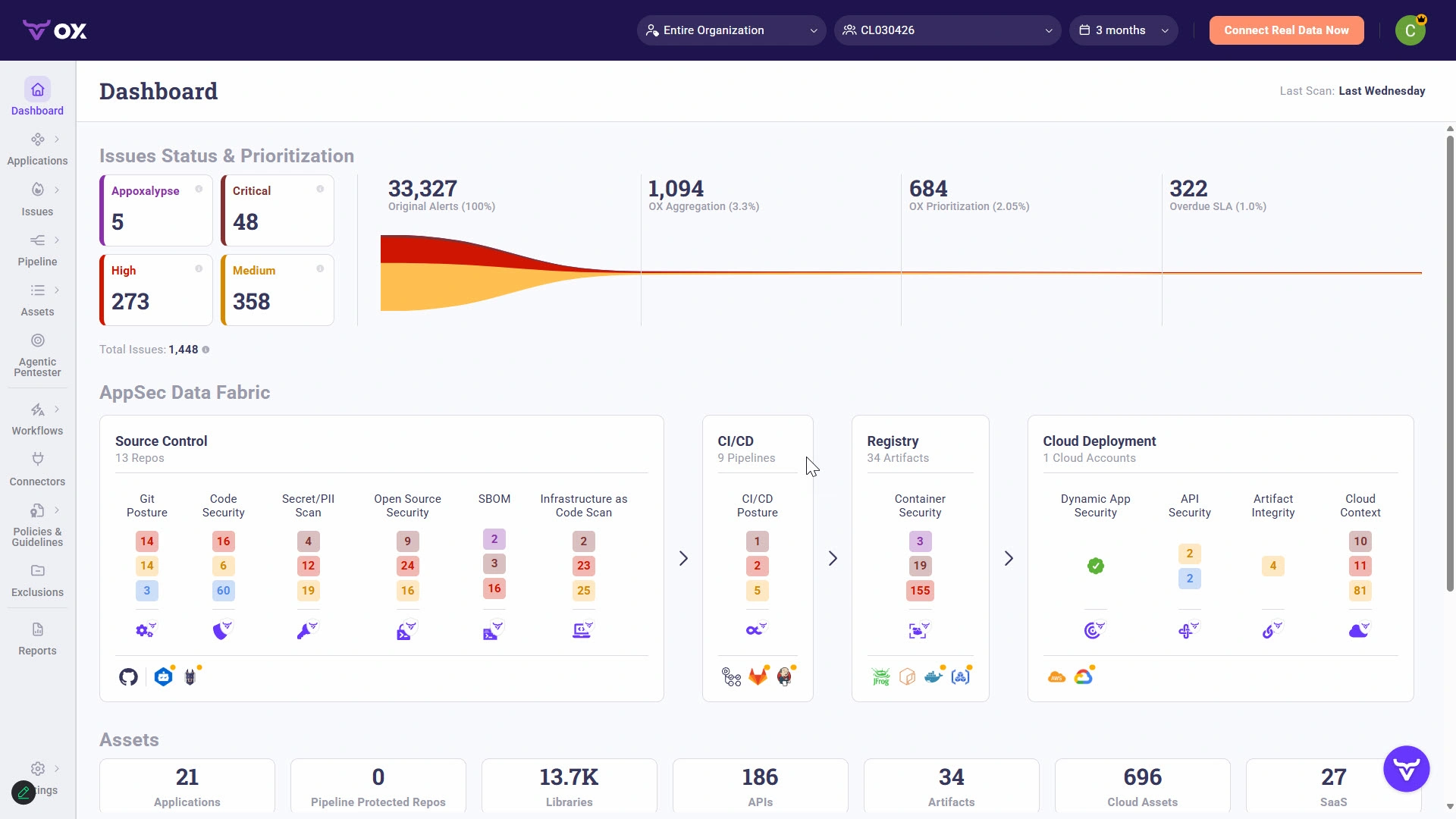
OX Security bills itself as a unified application security platform. It covers the entire software development lifecycle from code creation to cloud deployment. The platform targets enterprise organizations with complex environments.
The company focuses on what they call “code to cloud” security. This means tracing vulnerabilities from source code through build pipelines and into production environments. Context matters at every stage.
Key Features of OX Security
OX Security packs several capabilities into one platform:
- Pipeline Bill of Materials (PBOM): Tracks every component through your CI/CD pipeline
- Vibe Security: Scans AI-generated code in real time as developers write it
- Static Application Security Testing: Analyzes source code for vulnerabilities
- Software Composition Analysis: Identifies risks in open-source dependencies
- Infrastructure as Code scanning: Checks cloud configurations for misconfigurations
- Container security: Scans container images for known vulnerabilities
- Secrets detection: Finds exposed credentials and API keys in code
The platform’s strength lies in connecting these capabilities. A vulnerability found in code gets tracked through the build process. You see exactly where it ends up in production.
OX Security’s Approach to Risk Prioritization
OX Security uses runtime context to prioritize findings. The platform doesn’t just tell you a vulnerability exists. It shows whether that vulnerability affects code actually running in production.
This runtime-relevant risk assessment changes how teams work. Developers fix real problems first. Security teams stop chasing issues that don’t matter.
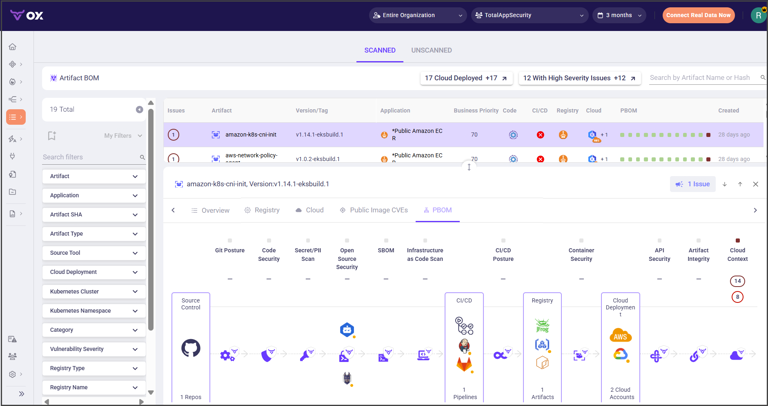
The PBOM technology provides full traceability. You can follow any component from its source through every build stage. This visibility helps during incident response and compliance audits.
AI Code Security with Vibe Security
AI-generated code introduces new security challenges. Developers use tools like GitHub Copilot and ChatGPT daily. This code often contains vulnerabilities that traditional scanners miss.
OX Security’s Vibe Security feature addresses this directly. It applies security policies at code creation time. Vulnerabilities get caught before they enter the codebase.
This proactive approach differs from reactive scanning. Instead of finding problems after commits, you prevent them during development. The shift-left mentality reaches its logical endpoint.
Endor Labs: Platform Overview and Core Capabilities
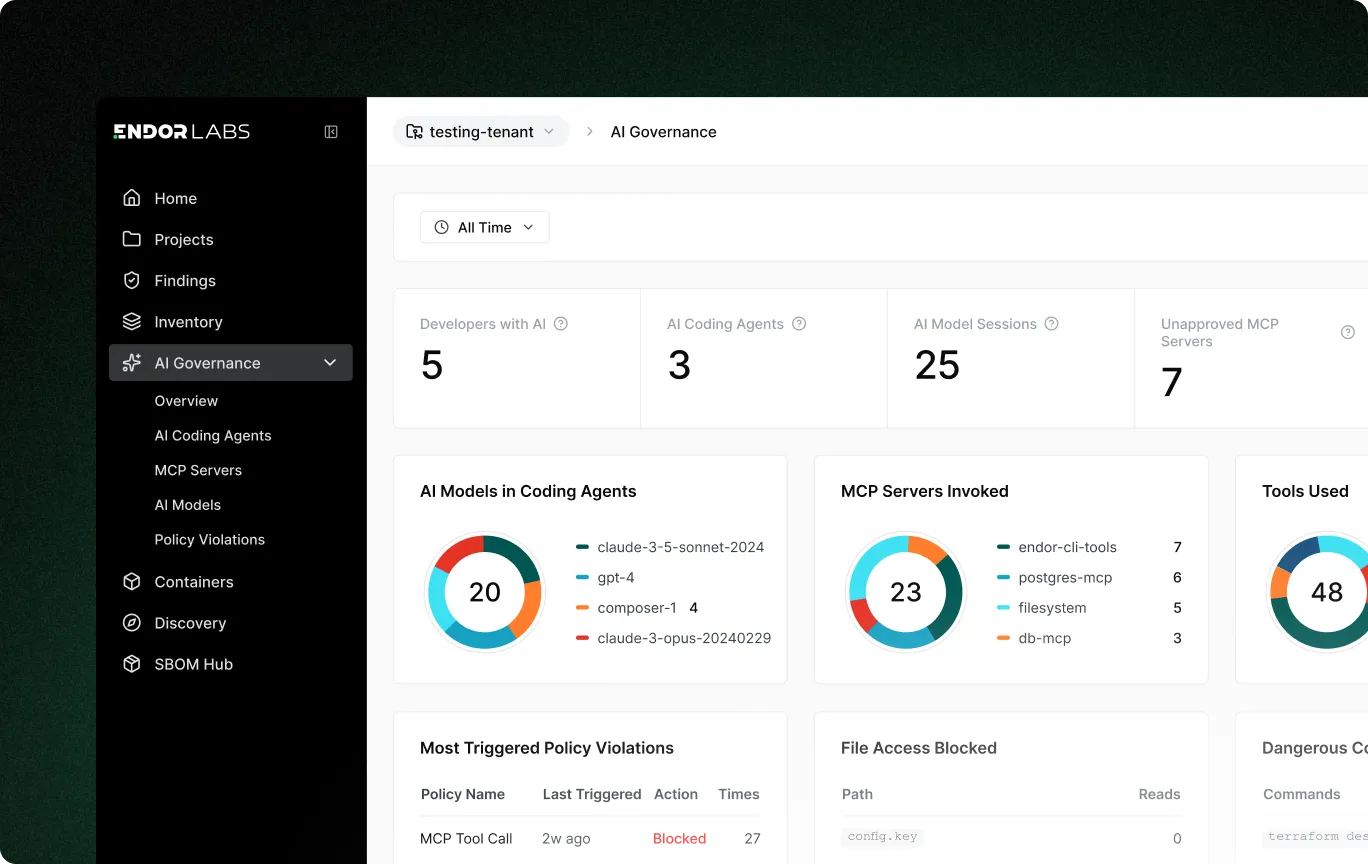
Endor Labs started with a specific focus: open-source security and dependency management. The platform excels at understanding how your code actually uses third-party libraries.
The company built its reputation on reachability analysis. This technology maps out code execution paths. It determines which vulnerabilities can actually be triggered in your applications.
Key Features of Endor Labs
Endor Labs offers several standout capabilities:
- Function-level reachability analysis: Traces code paths to find exploitable vulnerabilities
- Dependency mapping: Creates complete graphs of all open-source components
- SBOM generation: Produces software bills of materials for compliance
- License risk management: Identifies license conflicts and compliance issues
- Vulnerability prioritization: Ranks issues by actual exploitability
- CI/CD integration: Fits into existing development pipelines
The platform shines when teams struggle with SCA alert fatigue. Traditional tools might flag thousands of vulnerabilities. Endor Labs filters these down to the ones that matter.
How Endor Labs Handles Reachability
Reachability analysis sits at the heart of Endor Labs. The platform analyzes how your code interacts with dependencies. It builds execution graphs showing which functions get called.
According to community discussions, Endor Labs claims strong language coverage for reachability. They analyze open-source libraries going back several years. This historical data helps assess older dependencies.
Questions remain about coverage depth. How many CVEs include vulnerable function mapping? How quickly does reachability data appear for new vulnerabilities? These details matter for real-world use.
Transitivity Analysis Explained
Direct dependencies are only part of the picture. Your code uses library A, which uses library B, which uses library C. Vulnerabilities in library C still affect your application.
Endor Labs traces these transitive dependencies. The platform shows the complete dependency tree. You see exactly how vulnerable code reaches your application.
Some users report approximations in transitive analysis. Perfect accuracy isn’t always possible with deeply nested dependencies. Understanding these limitations helps set realistic expectations.
Comparing OX Security and Endor Labs: Feature-by-Feature Analysis
Let’s put these platforms side by side. The table below summarizes key differences between OX Security and Endor Labs.
| Feature | OX Security | Endor Labs |
|---|---|---|
| Primary Focus | Full code-to-cloud security | Open-source dependency security |
| SAST | Native support | Limited or third-party |
| SCA | Included | Core strength |
| Reachability Analysis | Runtime context-based | Function-level analysis |
| IaC Scanning | Native support | Limited |
| Container Security | Included | Basic support |
| DAST | Available | Not available |
| API Security | Included | Not available |
| AI Code Scanning | Yes (Vibe Security) | Limited |
| SBOM Generation | PBOM included | Core feature |
| License Management | Basic | Strong |
| Target Market | Enterprise | Enterprise and mid-market |
This comparison reveals fundamental differences in approach. OX Security aims to replace multiple security tools. Endor Labs does one thing exceptionally well.
Software Composition Analysis: OX Security vs Endor Labs Deep Dive
Both platforms offer SCA capabilities, but they take different approaches. Understanding these differences helps you choose based on your specific needs.
OX Security’s SCA Approach
OX Security treats SCA as one part of a larger platform. The tool identifies vulnerable dependencies and traces them through your pipeline. Context comes from integration with other security features.
The PBOM technology adds value here. You don’t just see that a vulnerable library exists. You see exactly how it flows through your build process and where it ends up deployed.
Runtime context helps prioritization. OX Security can tell you if a vulnerability affects code running in production. This information changes remediation priorities dramatically.
Endor Labs’ SCA Approach
Endor Labs built its entire platform around SCA excellence. Function-level reachability analysis represents their core innovation. The platform doesn’t just find vulnerable dependencies. It tells you if you actually use the vulnerable code.
Community feedback suggests strong reachability coverage across major languages. The platform analyzes open-source libraries to map vulnerable functions. When a CVE gets published, Endor Labs can often show if your code calls the affected functions.
This granular analysis reduces false positives significantly. Teams report much lower alert volumes compared to traditional SCA tools. Developers actually pay attention to the findings that remain.
Which SCA Approach Works Better?
The answer depends on your priorities. If you want best-in-class open-source vulnerability detection, Endor Labs specializes in exactly that. Their reachability analysis sets industry standards.
If you want SCA as part of a broader security platform, OX Security delivers. You get decent SCA capabilities alongside SAST, DAST, container scanning, and more.
Organizations drowning in SCA alerts should seriously consider Endor Labs. Their noise reduction alone justifies evaluation. Teams already managing multiple security tools might prefer OX Security’s consolidation approach.
Static Application Security Testing Comparison
SAST capabilities differ significantly between these platforms. This matters if you need source code analysis alongside dependency scanning.
OX Security SAST Features
OX Security includes native SAST scanning. The platform analyzes your source code for common vulnerabilities like SQL injection, cross-site scripting, and authentication flaws.
Integration with other platform features adds context. A SAST finding connects to deployment information. You see if vulnerable code actually runs in production and how it got there.
The Vibe Security feature extends SAST to AI-generated code. As developers use AI assistants, the platform applies security policies in real time. This catches vulnerabilities before they enter version control.
Endor Labs SAST Capabilities
Endor Labs focuses primarily on open-source dependency security. Native SAST capabilities remain limited compared to dedicated tools. The platform excels at SCA, not source code analysis.
Organizations using Endor Labs typically pair it with a separate SAST tool. This creates a multi-vendor situation. You get best-in-class SCA but need additional solutions for complete coverage.
SAST Comparison Summary
If SAST matters to your security program, OX Security offers clear advantages. Native capabilities mean one platform handles both source code and dependency analysis.
Endor Labs users should plan for additional tooling. The platform wasn’t built for SAST, and forcing that use case leads to gaps. Accept this limitation and pair it with appropriate solutions.
Infrastructure as Code and Cloud Security
Modern applications deploy to cloud environments. Misconfigurations in infrastructure code create security risks. Both platforms address this differently.
OX Security Cloud Coverage
OX Security includes Infrastructure as Code scanning. The platform checks Terraform, CloudFormation, Kubernetes manifests, and other configuration files. Misconfigurations get flagged before deployment.
Container security adds another layer. Images get scanned for vulnerabilities during the build process. You know what ships to production and what risks it carries.
The code-to-cloud philosophy means traceability. A misconfiguration in a Terraform file connects to the actual cloud resource it creates. You see impact, not just findings.
Endor Labs Cloud Approach
Endor Labs maintains focus on software supply chain security. IaC scanning and cloud security fall outside their core competency. The platform doesn’t aim to replace dedicated cloud security tools.
This limitation means additional tooling for cloud-native organizations. If you deploy to AWS, Azure, or GCP, you’ll need other solutions for configuration scanning and cloud security posture management.
Cloud Security Verdict
Organizations with significant cloud footprints should favor OX Security’s broader coverage. One platform handles code, dependencies, containers, and cloud configurations.
Endor Labs users accept narrower scope in exchange for SCA depth. This tradeoff makes sense for some organizations. Know your priorities before deciding.
Runtime Security and Threat Detection
Static analysis only goes so far. What happens when code runs in production? Runtime visibility changes security operations significantly.
OX Security Runtime Context
OX Security emphasizes runtime-relevant risk assessment. The platform doesn’t just identify theoretical vulnerabilities. It shows what actually matters in your running applications.
This context helps prioritization dramatically. A critical CVE in unused code doesn’t need immediate attention. A medium-severity issue in hot code paths demands quick action.
The PBOM technology supports this capability. By tracking components through the pipeline, OX Security knows what runs where. This visibility enables smart prioritization.
Endor Labs Runtime Capabilities
Endor Labs approaches runtime differently through reachability analysis. The platform determines if vulnerable code can execute based on static analysis. It traces code paths to find reachable vulnerabilities.
This isn’t true runtime monitoring. The platform analyzes code to determine potential execution paths. Actual production behavior doesn’t factor into the analysis.
The approach works well for prioritization. Reachability analysis significantly reduces false positives. But it differs from observing actual runtime behavior.
Runtime Security Comparison
Both platforms help prioritize vulnerabilities based on exploitability. They use different methods to achieve similar goals.
OX Security combines static analysis with runtime context. The platform knows what code actually runs in production. This real-world data drives prioritization.
Endor Labs uses sophisticated static analysis to determine reachability. The approach works well but lacks actual runtime data. Theoretical reachability doesn’t always match production behavior.
Integration Capabilities and Developer Experience
Security tools that disrupt developer workflows get ignored. Both platforms understand this reality. Integration quality determines adoption success.
OX Security Integrations
OX Security integrates with major development platforms:
- Source control: GitHub, GitLab, Bitbucket, Azure DevOps
- CI/CD: Jenkins, CircleCI, GitHub Actions, GitLab CI
- IDEs: Various plugins for common development environments
- Ticketing: Jira, ServiceNow for issue tracking
- Communication: Slack, Teams for notifications
The platform fits into existing workflows. Developers see findings in familiar tools. Security teams manage everything from a central dashboard.
Endor Labs Integrations
Endor Labs also integrates with standard development tools. The platform supports major source control and CI/CD systems. Teams can run scans within existing pipelines.
One consideration surfaced in community discussions: organizations with strict security requirements may need local scanning options. Some environments can’t send source code to external services.
Endor Labs offers CLI tools for these situations. Local scanning enables SBOM creation and basic vulnerability detection. Full reachability analysis may require different integration approaches.
Developer Experience Comparison
Both platforms work to minimize developer friction. Security findings surface where developers already work. Remediation guidance helps fix issues quickly.
OX Security’s broader scope means more findings to manage. The platform handles multiple security domains. Developers interact with varied alert types.
Endor Labs’ focused approach simplifies the developer experience. Alerts center on dependency vulnerabilities. The reduced scope means less cognitive load.
Pricing Models and Total Cost of Ownership
Pricing information for both platforms requires direct vendor engagement. Neither publishes standard rates. This section discusses pricing approaches and cost considerations.
OX Security Pricing Approach
OX Security targets enterprise organizations. Pricing typically reflects this market positioning. Expect custom quotes based on organization size, repository count, and feature requirements.
The platform’s breadth affects cost calculations. You’re potentially replacing multiple point solutions. The total cost should compare against combined spending on separate tools.
Consider what you’d pay for separate SAST, SCA, container scanning, IaC analysis, and secrets detection tools. OX Security bundles these capabilities. The consolidation may reduce total security spending.
Endor Labs Pricing Approach
Endor Labs also uses custom enterprise pricing. Community feedback suggests the platform positions as a premium SCA solution. Pricing reflects the advanced reachability analysis capabilities.
The focused scope limits direct cost comparisons. You’re buying best-in-class SCA, not a full security platform. Additional tools for other security domains add to total spending.
Organizations replacing tools like Black Duck should compare carefully. Legacy SCA contracts may have different pricing structures. Evaluate total cost including any additional tools needed.
Total Cost of Ownership Analysis
True security costs extend beyond license fees. Consider these factors:
- Integration effort: How long to deploy and configure?
- Training requirements: What learning curve do teams face?
- Operational overhead: How much time managing the platform?
- Alert volume: More false positives means more wasted developer time
- Remediation efficiency: Better context means faster fixes
- Compliance support: Does it generate required documentation?
OX Security’s consolidation approach may reduce integration complexity. One platform means one vendor relationship. But broader scope might mean longer deployment timelines.
Endor Labs’ focused nature speeds deployment for SCA use cases. But you’ll need additional vendor relationships for complete coverage. Multiple tools mean multiple integrations.
Vulnerability Prioritization and Risk Scoring
Both platforms aim to reduce alert fatigue. Their approaches to prioritization differ in important ways.
OX Security Risk Assessment
OX Security uses multiple factors for prioritization:
- Vulnerability severity (CVSS scores)
- Exploitability indicators
- Runtime context (is the code actually running?)
- Pipeline presence (where does this component exist?)
- Exposure level (internal vs. external facing)
The combination provides nuanced risk assessment. A high-severity vulnerability in unused code scores differently than the same CVE in production-running code.
Teams can customize prioritization rules. Different applications may warrant different risk tolerances. The platform supports varied security policies across projects.
Endor Labs Risk Assessment
Endor Labs centers prioritization on reachability. Their approach asks: can this vulnerability actually be triggered in your application?
Additional factors include:
- Function-level reachability analysis
- Transitive dependency depth
- CVE severity and exploitability
- Public exploit availability
- EPSS (Exploit Prediction Scoring System) data
- KEV (Known Exploited Vulnerabilities) catalog status
Community discussions mention organizations building custom risk scoring on top of Endor Labs data. The platform provides inputs that feed into existing risk frameworks.
Prioritization Effectiveness Comparison
Both approaches significantly outperform traditional SCA tools. Alert volumes drop dramatically when context drives prioritization.
Endor Labs’ reachability focus excels at dependency vulnerability prioritization. If your primary pain point is SCA noise, their approach delivers clear value.
OX Security’s broader context helps when vulnerabilities span multiple domains. Understanding how code, infrastructure, and runtime interact enables comprehensive risk assessment.
Compliance and Regulatory Support
Security tools increasingly support compliance requirements. SBOM mandates and supply chain regulations drive this trend.
OX Security Compliance Features
OX Security generates comprehensive pipeline documentation. The PBOM tracks every component through your build process. This traceability supports various compliance frameworks.
The platform helps with:
- SBOM generation in standard formats (SPDX, CycloneDX)
- Supply chain transparency requirements
- Audit trail documentation
- Policy enforcement and evidence collection
- Executive reporting and metrics
Organizations facing SSDF (Secure Software Development Framework) or similar requirements benefit from the comprehensive approach. One platform provides evidence across multiple security domains.
Endor Labs Compliance Features
Endor Labs produces industry-standard SBOMs. The platform maps all open-source components and their relationships. License information helps manage compliance risks.
Key compliance capabilities include:
- SBOM generation with full dependency trees
- License conflict detection
- Open-source policy enforcement
- Vulnerability disclosure documentation
- Audit-ready reports
For open-source compliance specifically, Endor Labs provides deep capability. The platform excels at understanding and documenting dependency relationships.
Compliance Comparison
Both platforms support evolving compliance requirements. The choice depends on your regulatory environment.
Organizations needing broad compliance documentation favor OX Security. The platform covers multiple security domains in one place. Auditors get comprehensive visibility.
Organizations with specific open-source compliance needs may find Endor Labs sufficient. Deep dependency analysis and license management address common requirements.
Enterprise Readiness and Scalability
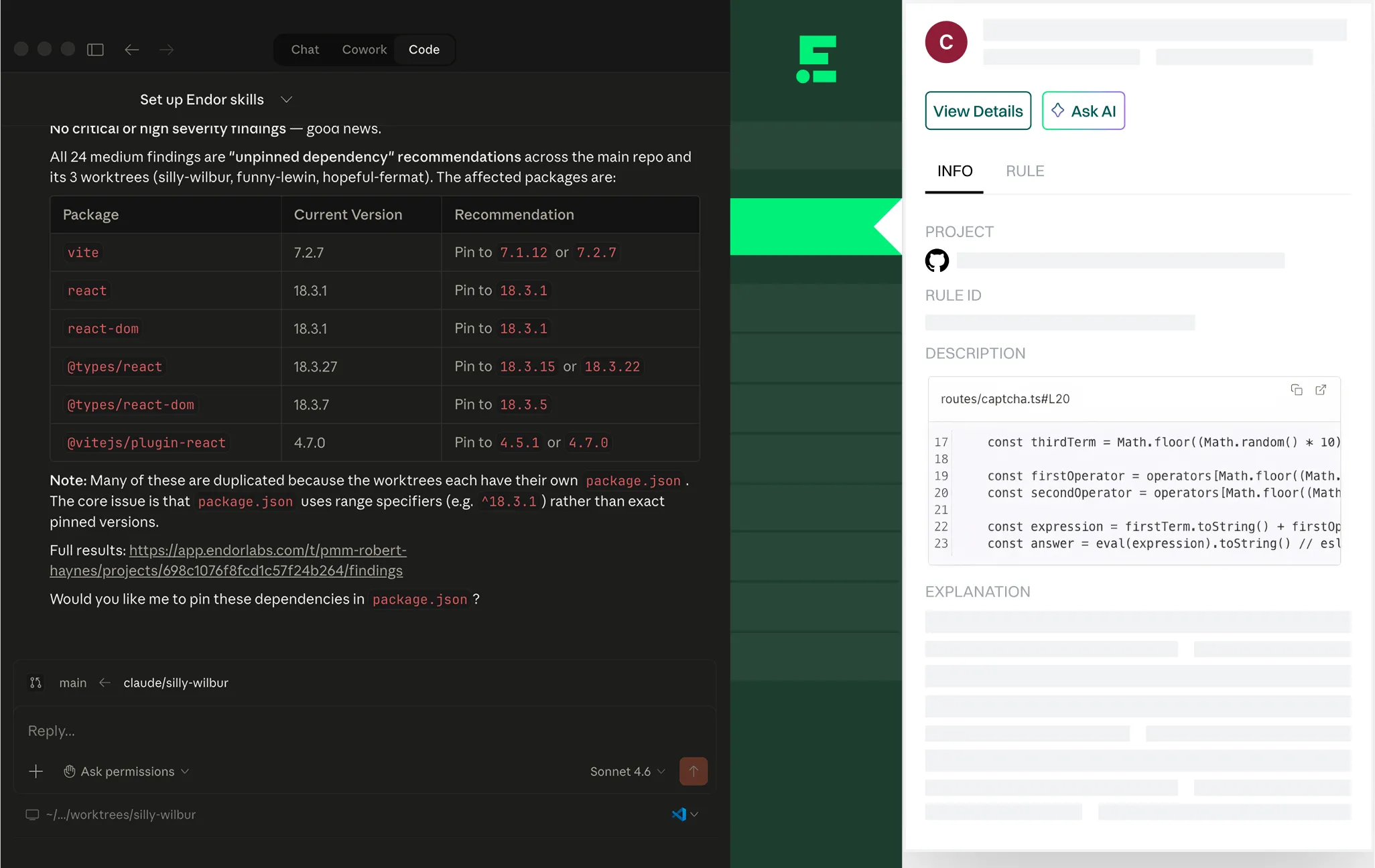
Large organizations have unique requirements. Scale, support, and stability matter when security tools become business-critical.
OX Security Enterprise Features
OX Security targets enterprise customers explicitly. The platform handles large-scale deployments across many teams and repositories.
Enterprise capabilities include:
- Role-based access control
- Multi-tenant architecture
- SSO integration
- API access for automation
- Custom workflow configuration
- Dedicated support options
The platform positions itself for complex environments. Organizations with diverse technology stacks and multiple development teams represent the target market.
Endor Labs Enterprise Features
Endor Labs also serves enterprise customers. The platform handles scanning at significant scale. Large repository counts don’t present architectural limitations.
Enterprise considerations include:
- Cloud-native architecture
- API-first design
- Integration flexibility
- Support options
- Deployment choices
One community discussion mentioned considerations for sensitive environments. Some organizations can’t send source code to external services. Understanding deployment options matters for security-conscious enterprises.
Scalability Comparison
Both platforms handle enterprise scale. The architecture decisions differ but both support large deployments.
OX Security’s broader scope means more moving parts. This complexity may require more operational attention. But consolidation reduces overall tool sprawl.
Endor Labs’ focused scope simplifies scaling for SCA use cases. The platform does one thing at scale. Additional capabilities require other solutions.
Customer Support and Community
Vendor relationships matter beyond product features. Support quality and community resources affect long-term success.
OX Security Support
OX Security provides typical enterprise vendor support. Documentation, training, and direct assistance options exist. The specific support tiers depend on contract terms.
The company appears active in the application security space. They participate in industry events and produce educational content. Marketing materials emphasize enterprise-grade support.
Endor Labs Support
Endor Labs offers support appropriate for enterprise customers. Documentation covers technical implementation and best practices. Direct support channels exist for paying customers.
Community discussions provide interesting insights. Real users share experiences and ask questions in forums like Reddit. This community knowledge complements official documentation.
One poster mentioned being in evaluation mode, seeking “crowdsource intel from the community.” This suggests an engaged user base willing to share experiences.
Support Comparison
Both vendors provide enterprise-appropriate support. Specific terms require direct engagement during sales processes.
OX Security’s broader platform may require more support touchpoints. Multiple feature areas mean more questions. But one vendor relationship simplifies communication.
Endor Labs’ focused offering may mean faster resolution for SCA issues. Specialized expertise addresses specific problems. But you’ll need other vendors for other domains.
Making the Decision: Which Platform Fits Your Needs?
Neither platform is universally better. The right choice depends on your specific situation. Let’s break down decision factors.
Choose OX Security When:
- You want platform consolidation: Replacing multiple security tools with one platform appeals to you
- AI-generated code is common: Your developers use Copilot, ChatGPT, or similar tools frequently
- Code-to-cloud traceability matters: You need to trace components from source to production
- Container and cloud security are priorities: IaC scanning and container analysis are requirements
- Complex environments exist: Multiple teams, diverse tech stacks, and varied deployment targets
- Enterprise scale is required: Large organization with many repositories and developers
Choose Endor Labs When:
- SCA is your primary pain point: Dependency vulnerability management drives your decision
- Alert fatigue overwhelms your team: Current SCA tools generate too many false positives
- Reachability analysis matters most: You want to know if vulnerabilities are actually exploitable
- Open-source risk management is critical: License compliance and dependency governance are priorities
- You have other tools for SAST, DAST, etc.: Adding best-in-class SCA to an existing security stack
- Deep SCA insights beat broad coverage: You prefer excellence in one area over good-enough in many
Decision Framework
Ask yourself these questions:
- What’s your biggest security pain point right now?
- How many security tools do you currently manage?
- Does tool consolidation drive your evaluation?
- How mature is your current SCA capability?
- Do you need SAST, DAST, and IaC scanning?
- What’s your budget for security tooling?
- How many developers will use the platform?
- What compliance requirements affect your decision?
Your answers guide the choice. Organizations wanting complete platforms lean toward OX Security. Organizations wanting best-in-class SCA favor Endor Labs.
Alternative Solutions to Consider
The application security market includes other options. Brief consideration of alternatives ensures thorough evaluation.
Checkmarx
Checkmarx offers complete application security coverage. The platform includes SAST, SCA, IaC, API security, container scanning, DAST, and secrets detection. AI-powered protection covers both human-written and AI-generated code.
Checkmarx positions against Endor Labs directly, noting that Endor Labs “is fine for open-source security and risk management, but that’s where it ends.” The platform aims to eliminate blind spots with comprehensive coverage.
Aikido Security
Aikido Security markets itself as developer-first security. The platform includes SCA with intelligent prioritization, plus SAST, DAST, and cloud configuration checks.
Aikido positions as a more accessible alternative to enterprise tools. Their pricing and workflow target organizations wanting “developer-friendly” approaches.
Semgrep
Semgrep appears in discussions alongside Endor Labs. The platform offers SCA capabilities with reachability analysis. Organizations evaluate both tools together.
Semgrep’s approach differs technically. Understanding these differences requires detailed technical evaluation.
Traditional SCA Tools
Legacy tools like Black Duck still serve many organizations. These tools lack advanced reachability analysis but offer mature features and broad coverage.
Organizations with existing contracts should evaluate transition costs. Moving to new tools requires effort. The benefits must justify migration investment.
Getting Started with Either Platform
Ready to evaluate? Here’s how to approach either vendor.
Evaluation Process for OX Security
- Request a demo through their website
- Prepare information about your environment (repos, languages, CI/CD tools)
- Identify pilot projects for proof of concept
- Define success criteria before starting
- Plan integration with existing tools
- Involve both security and development teams
Evaluation Process for Endor Labs
- Contact sales for demo and trial access
- Identify high-priority repositories for testing
- Compare findings against current SCA tool
- Measure alert reduction from reachability analysis
- Test integration with your CI/CD pipeline
- Evaluate developer experience
Questions to Ask During Demos
Prepare these questions for vendor conversations:
- How do you handle languages we use? (Specify your stack)
- What’s the reachability coverage for our primary languages?
- How fast do new CVEs get reachability analysis?
- Can we run scans locally for sensitive code?
- What integrations exist for our CI/CD platform?
- How does pricing scale with our growth?
- What support options are available?
- Can we see customer references in our industry?
Conclusion
OX Security and Endor Labs serve different needs despite operating in similar spaces. OX Security provides comprehensive code-to-cloud coverage with multiple security capabilities in one platform. Endor Labs delivers exceptional open-source vulnerability detection through advanced reachability analysis.
Your choice should match your priorities. Consolidation-focused organizations benefit from OX Security’s breadth. Teams fighting SCA alert fatigue find relief with Endor Labs’ precision. Evaluate both against your specific requirements, and you’ll make the right decision for your security program.
FAQs About OX Security vs Endor Labs Comparison
| What’s the main difference between OX Security and Endor Labs? | OX Security offers a comprehensive code-to-cloud security platform covering SAST, SCA, IaC, containers, and more. Endor Labs focuses specifically on software composition analysis with advanced reachability analysis for open-source dependencies. OX aims to replace multiple tools while Endor excels at one domain. |
| Which platform has better reachability analysis? | Endor Labs built their platform around function-level reachability analysis. This capability represents their core strength. OX Security uses runtime context for prioritization, which provides different but complementary insights. For pure reachability analysis, Endor Labs leads the market. |
| Do I need additional security tools with Endor Labs? | Yes. Endor Labs focuses on open-source dependency security. You’ll need separate tools for SAST, DAST, container scanning, IaC analysis, and other security domains. Many organizations run Endor Labs alongside complementary solutions. |
| Does OX Security support AI-generated code scanning? | Yes. OX Security includes Vibe Security, which scans AI-generated code in real time. This feature applies security policies as developers use tools like GitHub Copilot. The capability helps catch vulnerabilities before they enter version control. |
| Which platform reduces false positives better? | Both platforms significantly reduce false positives compared to traditional SCA tools. Endor Labs’ reachability analysis specifically targets this problem for dependency vulnerabilities. OX Security uses runtime context across multiple security domains. The best choice depends on which alert types burden your team most. |
| How do pricing models compare between OX Security and Endor Labs? | Both vendors use custom enterprise pricing. Neither publishes standard rates. OX Security’s broader platform may cost more but potentially replaces multiple tools. Endor Labs’ focused offering prices against SCA competitors. Request quotes based on your specific requirements. |
| Can Endor Labs scan code locally without sending it to the cloud? | Endor Labs offers CLI tools for local scanning. This supports SBOM creation and basic vulnerability detection. Full reachability analysis capabilities may require different integration approaches. Discuss specific requirements with the vendor for sensitive environments. |
| Which platform integrates better with CI/CD pipelines? | Both platforms integrate with major CI/CD systems including Jenkins, GitHub Actions, GitLab CI, and others. Integration quality is comparable. The choice depends more on overall platform fit than integration capabilities specifically. |
| Is OX Security or Endor Labs better for enterprise organizations? | Both platforms serve enterprise customers. OX Security explicitly targets large organizations with complex environments. Endor Labs handles enterprise scale for SCA needs. Your decision should consider whether you want consolidated security or best-in-class SCA. |
| How long does deployment take for each platform? | Deployment timelines vary based on organization size and complexity. Endor Labs’ focused scope may enable faster deployment for SCA use cases. OX Security’s broader platform might require more configuration time but delivers more capabilities. Plan evaluations accordingly. |

 Stack Insight is intended to support informed decision-making by providing independent information about business software and services. Some product details, including pricing, features, and promotional offers, may be supplied by vendors or partners and can change without notice.