Snyk vs Endor Labs: The Complete 2026 Comparison Guide for Application Security Teams
Picking the right Software Composition Analysis (SCA) tool can make or break your application security program. Both Snyk and Endor Labs have carved out strong positions in the market, but they take very different approaches to solving the same problem: keeping your open source dependencies secure.
Snyk has built its reputation on developer-friendly workflows and a massive proprietary vulnerability database. Endor Labs, the newer player, bets everything on function-level reachability analysis. The claim? Up to 97% of vulnerability alerts are just noise because the vulnerable code never actually runs in your application.
This comparison digs into every angle that matters. We’ll cover detection accuracy, false positive rates, language support, pricing models, integrations, and real-world performance. By the end, you’ll know which tool fits your team’s needs, budget, and technical requirements.
Understanding the Core Philosophy Behind Each Tool
Before we compare features line by line, you need to understand what each company is really trying to do. Their approaches come from different beliefs about what makes SCA actually useful.
Snyk’s Approach: Speed and Developer Experience First
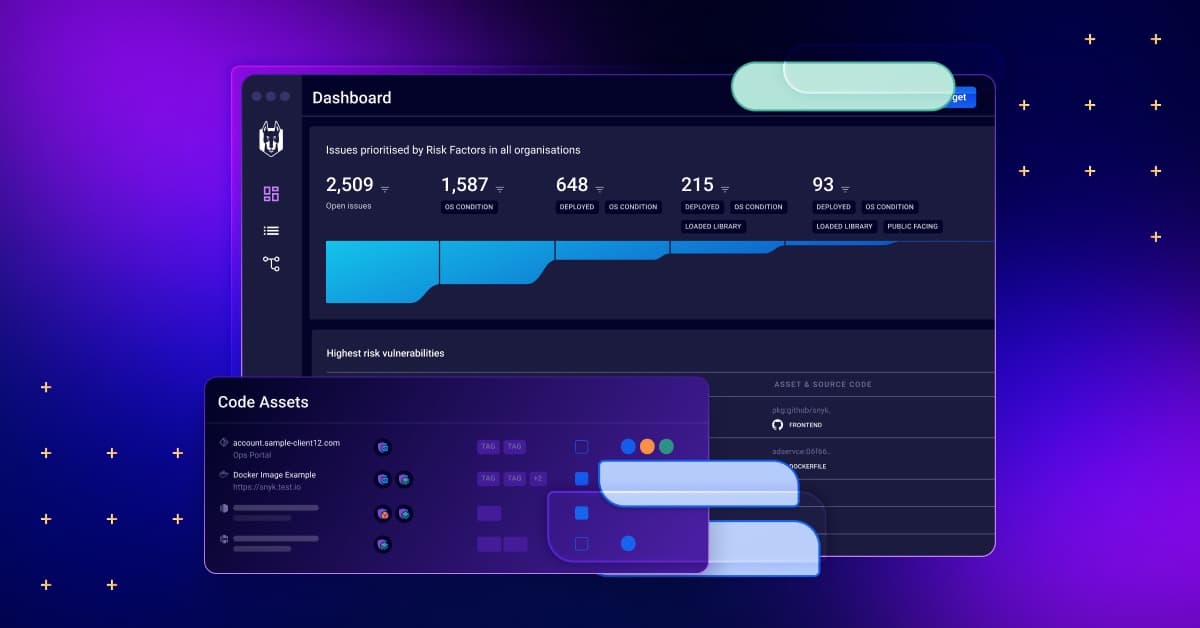
Snyk started in 2015 with a clear mission. Make security something developers actually use, not something that gets ignored. The company built everything around the developer workflow.
Their vulnerability database is a major selling point. According to Snyk, their proprietary database is 3x larger than the next largest public database. They also claim 47-day faster disclosure on average compared to public sources like NVD.
What does this mean in practice? Snyk often knows about vulnerabilities before they hit public databases. If a new zero-day drops in a popular package, Snyk users might get alerts days or weeks before teams using NVD-based tools.
The platform focuses on automated fix PRs. Find a vulnerability, get a pull request that upgrades the package. Simple workflow. Developers don’t need to leave their IDE or GitHub.
Endor Labs’ Approach: Reachability Above Everything
Endor Labs launched with a provocative idea. Most vulnerability alerts don’t matter. Not because the vulnerabilities aren’t real, but because your code never calls the vulnerable functions.
Think about it this way. You import a library with 500 functions. A vulnerability exists in function #347. But your code only uses functions #1, #5, and #12. Should you really drop everything to patch that vulnerability?
Endor Labs says no. Their function-level reachability analysis traces exactly which code paths your application uses. If the vulnerable function isn’t reachable, the alert gets deprioritized.
The result? Endor Labs claims up to 97% noise reduction in SCA alerts. That’s a bold number. It means if you normally get 100 vulnerability alerts, only 3 would be flagged as actually exploitable.
The Philosophical Divide
Here’s the real tension between these tools:
- Snyk believes you need comprehensive data fast. Know about every vulnerability, fix quickly, stay ahead of attackers.
- Endor Labs believes comprehensive data creates alert fatigue. Focus only on what’s actually exploitable in your specific codebase.
Neither philosophy is wrong. The right choice depends on your team’s capacity, risk tolerance, and how you’ve structured your security program.
Software Composition Analysis: Detection Capabilities Compared
Let’s get into the technical details. How well does each tool actually find vulnerabilities and dependencies?
Dependency Discovery
You can’t secure what you can’t see. Both tools need to build an accurate picture of every dependency in your codebase, including transitive dependencies (the dependencies of your dependencies).
An independent benchmark tested both tools against 10 open source projects. The results were striking.
Endor Labs identified many more dependencies than Snyk across most projects. This matters because missed dependencies mean missed vulnerabilities.
Why the gap? Endor Labs uses more aggressive dependency resolution. It doesn’t just look at your manifest files. It analyzes actual build artifacts and runtime behavior.
One specific example from the benchmark: the Prometheus project. Snyk incorrectly identified Go Modules instead of Go packages. This led to a large number of false positives. Endor Labs correctly identified the package-level dependencies.
Vulnerability Identification
Finding dependencies is step one. Matching them against known vulnerabilities is step two.
| Aspect | Snyk | Endor Labs |
|---|---|---|
| Vulnerability Database | Proprietary + public sources, claimed 3x larger than competitors | Multiple sources including NVD, GitHub Advisories, and proprietary research |
| Disclosure Speed | 47-day average advantage over NVD | Comparable to public database timing |
| Coverage Breadth | Broader initial coverage | Deeper analysis on supported languages |
| False Positive Rate | Higher (includes unreachable vulnerabilities) | Lower (filters by reachability) |
Snyk’s larger database cuts both ways. You’ll get more alerts, including for vulnerabilities in code you don’t actually use. Endor Labs counters this with its reachability filtering.
SBOM Generation Quality
Software Bills of Materials have become a compliance requirement for many organizations. Executive Order 14028 made SBOMs mandatory for US federal contractors. The EU Cyber Resilience Act has similar requirements.
Both tools generate SBOMs in standard formats (SPDX, CycloneDX). But quality varies.
A customer quote from Endor Labs captures the difference:
“This is where having Endor Labs is critical. It helps us identify all dependencies, understand the impact of risk, and gives us the trust and assurance to back and commit to our leadership that we have a high integrity SBOM.”
Snyk’s SBOMs are accurate for direct dependencies. Transitive dependency coverage can be incomplete for some language ecosystems.
Endor Labs builds SBOMs from actual build analysis, not just manifest parsing. This creates more complete and accurate dependency inventories.
Reachability Analysis: The Make-or-Break Feature
This is where the two platforms diverge most sharply. Reachability analysis asks: can an attacker actually reach the vulnerable code?
How Snyk Handles Reachability
Snyk added reachability analysis to its platform using technology from its DeepCode acquisition. The feature works, but with limitations.
Snyk’s reachability currently covers three languages:
- Java
- JavaScript
- Python
For these languages, Snyk can trace whether your code calls vulnerable functions. But the analysis isn’t as deep as Endor Labs’ implementation.
Snyk’s reachability tends to be more conservative. It may mark vulnerabilities as potentially reachable even when the actual code path is unlikely. This is a safe approach, but it means more alerts.
How Endor Labs Handles Reachability
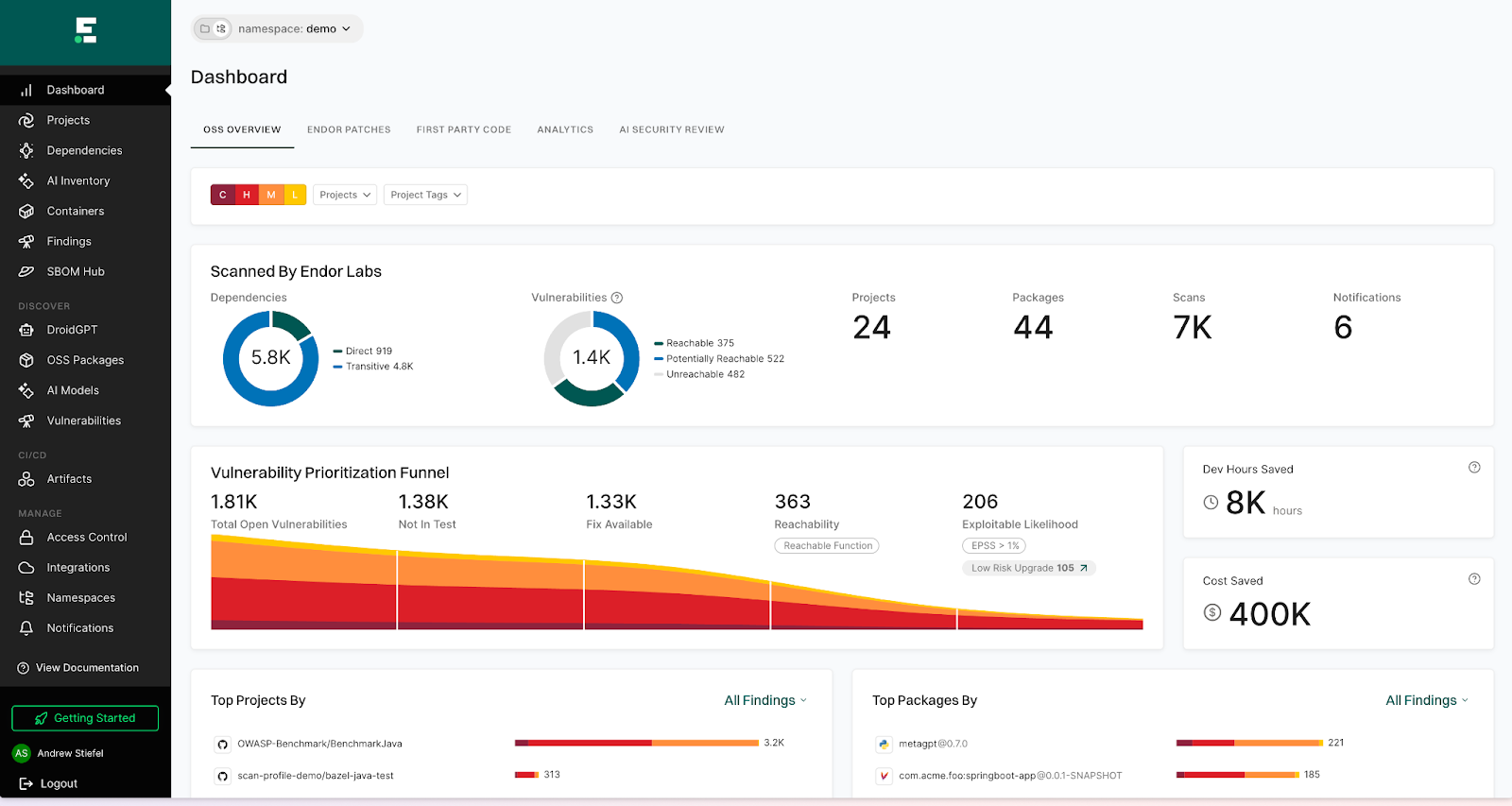
Reachability is Endor Labs’ core differentiator. The company built the platform around this capability from day one.
Endor Labs performs function-level reachability for:
- Java
- JavaScript
- Python
- Go
- Kotlin
- .NET
- Rust
That’s seven languages with deep reachability analysis, compared to Snyk’s three.
Function-level means exactly what it sounds like. The tool maps every function call in your application. It builds a complete call graph. When a vulnerability is reported, Endor Labs checks if any code path in your application can reach that function.
No path? The vulnerability gets deprioritized. It’s still tracked, but it won’t trigger emergency alerts.
The 97% Noise Reduction Claim
Endor Labs claims their reachability analysis reduces SCA noise by up to 97%. Let’s unpack what that means.
Modern applications have hundreds or thousands of dependencies. Each dependency might have dozens of known vulnerabilities over its lifetime. Traditional SCA tools report all of them.
But most vulnerabilities exist in functions you never call. Maybe it’s in an optional feature you don’t use. Maybe it’s in test utilities that don’t ship to production. Maybe it’s in a deprecated API you never imported.
Endor Labs’ analysis finds these cases. In their benchmark of 10 open source projects, the reachability filtering dramatically changed priority lists.
Is 97% realistic for your codebase? It depends. Larger applications with more dependencies tend to see higher noise reduction. Smaller applications with tighter dependency usage might see lower numbers.
Counterpoint: Does Reachability Matter If You’re Fast Enough?
Snyk’s implicit argument: if you can fix vulnerabilities quickly, reachability analysis matters less.
Their automated fix PRs mean you don’t need to analyze every vulnerability manually. Just merge the upgrade, run your tests, and move on. Fast fixes beat perfect prioritization.
There’s truth to this. If upgrading a package takes 5 minutes, why spend 30 minutes analyzing reachability?
The counter-argument: many upgrades aren’t that simple. Breaking changes exist. Semantic versioning isn’t always reliable. A single package upgrade can cascade into hours of compatibility work.
When upgrades are hard, you want to prioritize correctly. That’s where reachability analysis pays off.
Language and Ecosystem Support: Breadth vs Depth
Different tools cover different languages. This section breaks down what you can expect for each technology stack.
Snyk Language Support
Snyk supports a wide range of languages and package managers:
- JavaScript/TypeScript: npm, Yarn (excellent support)
- Python: pip, Poetry, Pipenv (strong support)
- Java: Maven, Gradle (strong support)
- Ruby: Bundler (good support)
- PHP: Composer (good support)
- .NET: NuGet (good support)
- Go: Go Modules (good support)
- Scala: sbt (moderate support)
- Swift/Objective-C: CocoaPods (moderate support)
- Docker: Container scanning (excellent support)
Snyk’s breadth is a strength. Almost any technology stack works. The depth of analysis varies by language, but basic SCA functions everywhere.
Endor Labs Language Support
Endor Labs takes a different approach. They claim 40+ languages for SCA coverage, but focus reachability analysis on a smaller set.
Full reachability support:
- Java
- JavaScript/TypeScript
- Python
- Go
- Kotlin
- .NET (C#, F#)
- Rust
Basic SCA without deep reachability:
- Ruby
- PHP
- Swift
- C/C++
- And many others
If your primary stack is Java, JavaScript, Python, Go, Kotlin, .NET, or Rust, Endor Labs provides the deepest analysis. If you’re heavy on Ruby, PHP, or Swift, you’ll get basic SCA but miss the reachability benefits.
Container Scanning Comparison
Both tools scan container images for vulnerabilities.
Snyk Container is a mature product. It integrates with major container registries (Docker Hub, ECR, GCR, ACR). It scans base images, application dependencies, and OS packages. Kubernetes monitoring helps track running containers.
Endor Labs added container scanning more recently. The focus is on connecting container contents to application code. If your Java application runs in a container, Endor Labs can trace reachability through both layers.
For teams prioritizing container security specifically, Snyk’s container product is more feature-rich. For teams wanting unified application and container analysis, Endor Labs’ integrated approach has benefits.
Infrastructure as Code Support
Snyk also offers infrastructure as code (IaC) scanning. This catches misconfigurations in Terraform, CloudFormation, Kubernetes manifests, and other IaC formats.
Endor Labs doesn’t have dedicated IaC scanning. Their focus stays on application dependencies and code analysis.
If you want a single platform for SCA, container scanning, and IaC, Snyk offers that breadth. If you want the deepest possible SCA analysis, Endor Labs specializes there.
Developer Experience and Workflow Integration
Security tools only work if developers actually use them. Both companies understand this, but they approach it differently.
Snyk’s Developer-First Design
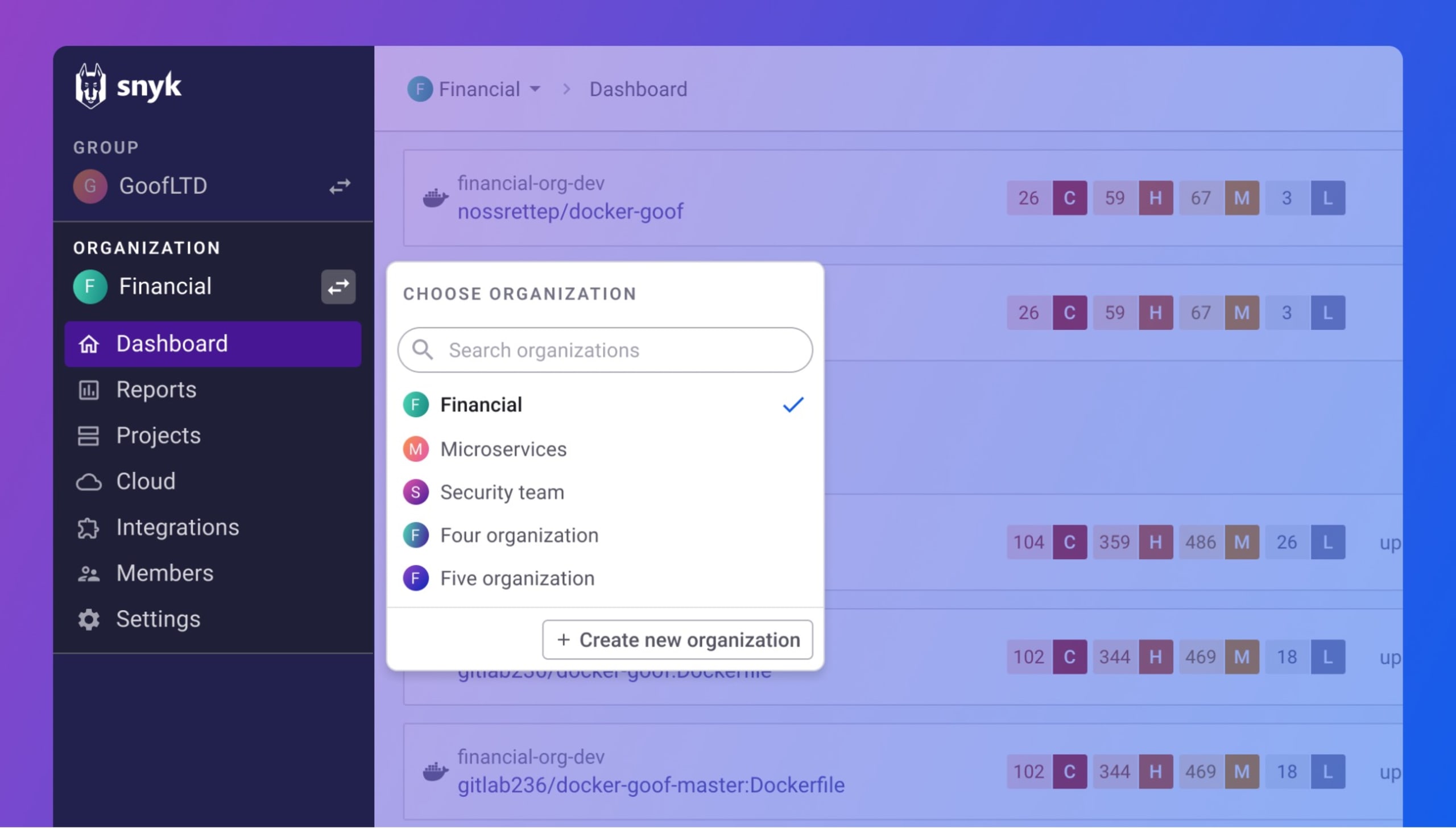
Snyk built its brand on developer experience. The company’s early growth came from grassroots adoption by individual developers, not enterprise sales.
Key developer features in Snyk:
- IDE plugins: Real-time scanning in VS Code, IntelliJ, and other IDEs
- CLI tool: Run snyk test from your terminal
- Git integration: Automatic PR checks and fix suggestions
- Automated fix PRs: One-click upgrades for vulnerable packages
- Developer-friendly explanations: Plain language descriptions of vulnerabilities
The automated fix PR feature deserves special attention. When Snyk finds a vulnerable dependency, it can open a pull request with the exact upgrade needed. The PR includes test guidance, breaking change warnings, and rollback instructions.
Developers don’t need to research fixes. They review the PR, run their tests, and merge if everything passes. This workflow removes friction from the remediation process.
Endor Labs’ Developer Experience
Endor Labs is newer, so its developer tooling has had less time to mature. But the company has invested heavily in this area.
Key developer features in Endor Labs:
- GitHub App: Free tier for public repositories
- CI/CD integrations: GitHub Actions, GitLab CI, Jenkins, CircleCI
- CLI tool: Local scanning and CI pipeline integration
- Fix recommendations: Upgrade suggestions with reachability context
- Evidence-based prioritization: Shows exactly why a vulnerability matters (or doesn’t)
Endor Labs’ differentiation is context. Every finding comes with evidence explaining why it’s prioritized the way it is. Developers can see the exact call path that makes a vulnerability reachable.
This evidence makes it easier to justify not fixing something. If a vulnerability is genuinely unreachable, developers can show security teams why they’re deprioritizing it.
User Interface Comparison
Both platforms have web dashboards for viewing results, tracking remediation, and managing policies.
Snyk’s UI has years of refinement. It’s clean and familiar to developers who’ve used GitHub or similar platforms. Navigation is intuitive. The learning curve is short.
Endor Labs’ marketing explicitly calls out that “noisy findings and a confusing user interface make managing open source vulnerabilities harder than it has to be” as a problem with competitors. Their UI emphasizes simplicity and signal-to-noise ratio.
User interface preferences are subjective. If possible, run both tools’ free tiers on your repositories before committing. See which dashboard your team prefers.
Pull Request Integration Quality
Both tools comment on pull requests with security findings. The quality of these comments matters for developer adoption.
Snyk PR comments include:
- Vulnerability severity
- Upgrade path (if available)
- Link to detailed advisory
- CVSS score
- Fix command
Endor Labs PR comments include:
- Vulnerability details
- Reachability status (exploitable or not)
- Call path showing how vulnerability is reached
- Prioritization reasoning
- Upgrade recommendation
The extra reachability context in Endor Labs’ PR comments helps developers make faster decisions. They can see immediately if a vulnerability needs attention or can wait.
Pricing and Licensing: Total Cost of Ownership
Security tool costs can spiral quickly at enterprise scale. Understanding pricing models upfront prevents budget surprises.
Snyk Pricing Structure
Snyk uses a tiered pricing model with per-user and per-application components.
| Tier | Price | Features |
|---|---|---|
| Free | $0 | Limited tests per month, basic features, small teams |
| Team | Starting at $25/user/month | Unlimited tests, basic reporting, GitHub/GitLab integration |
| Enterprise | Custom pricing | Advanced features, SSO, custom policies, priority support |
The free tier is genuinely useful for small projects and individual developers. It’s how many people first encounter Snyk.
Costs scale with both user count and test volume. Large organizations with many developers and repositories can face significant bills. The $25/user starting point climbs with add-ons for container scanning, IaC, and other modules.
Enterprise pricing requires direct negotiation. Expect annual contracts and volume commitments.
Endor Labs Pricing Structure
Endor Labs uses enterprise pricing without public per-user rates.
| Tier | Price | Features |
|---|---|---|
| Free (GitHub App) | $0 | Public repositories, basic scanning |
| Enterprise | Custom pricing | Full platform, reachability analysis, private repos, support |
Endor Labs positions itself as an enterprise platform from the start. There’s no mid-tier option for growing teams.
The free GitHub App is useful for evaluation and open source projects. But moving to production use requires an enterprise conversation.
Pricing negotiations for Endor Labs typically consider:
- Number of repositories
- Lines of code scanned
- Developer seats
- Support level required
Hidden Costs to Consider
Tool licensing is just part of total cost. Consider these factors:
Alert processing time: If Snyk generates 3x more alerts than Endor Labs, your team spends 3x more time triaging. Developer time has a cost.
False positive investigation: Every false positive wastes time. If one tool has a 20% false positive rate and another has 5%, that difference compounds across thousands of findings.
Integration effort: How much work to integrate with your existing tools? Snyk’s broader ecosystem might mean less custom work.
Training costs: Snyk’s simpler model might require less training. Endor Labs’ reachability concepts require more explanation.
ROI Calculation Example
Let’s model a hypothetical 50-developer team with 100 active repositories.
Scenario A: Snyk Team tier
- 50 users × $25/month = $1,250/month = $15,000/year base
- Average 500 vulnerability alerts per week
- 30 minutes average triage time per alert
- 250 hours/week on vulnerability triage
Scenario B: Endor Labs (hypothetical pricing)
- Enterprise license: ~$40,000/year (estimated, varies by negotiation)
- Average 50 vulnerability alerts per week (97% reduction from reachability)
- 30 minutes average triage time per alert
- 25 hours/week on vulnerability triage
In this model, Endor Labs’ higher license cost is offset by dramatically lower triage time. The actual math depends on your alert volumes and developer costs.
Security Features Beyond SCA
Both platforms offer features beyond basic dependency scanning. Understanding the full capability set helps with buy vs. build decisions.
Snyk’s Extended Platform
Snyk has expanded from pure SCA into a broader application security platform.
Snyk Code: Static application security testing (SAST) for first-party code. Finds bugs in code you write, not just code you import. Supports multiple languages with real-time IDE feedback.
Snyk Container: Container image scanning. Finds vulnerabilities in base images and installed packages. Monitors running containers in Kubernetes.
Snyk Infrastructure as Code: Configuration scanning for Terraform, CloudFormation, Kubernetes, ARM templates. Catches security misconfigurations before deployment.
Snyk Cloud: Cloud security posture management. Monitors running cloud environments for drift from secure configurations.
This breadth means Snyk can replace multiple point solutions. One vendor, one contract, integrated results.
Endor Labs’ Extended Platform
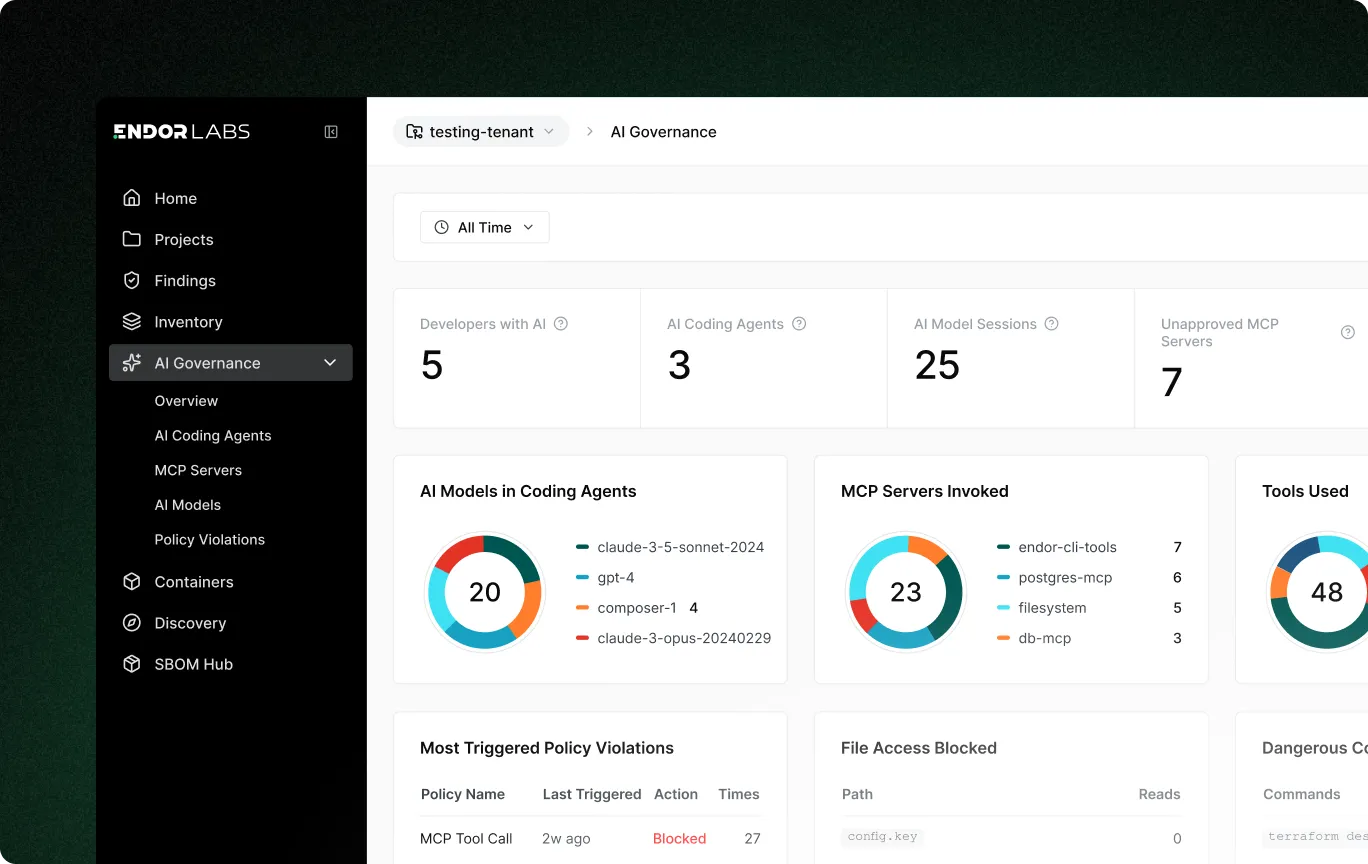
Endor Labs has been expanding beyond pure SCA while maintaining its focus on code analysis.
AI/ML Model Detection: Identifies AI models and services in your codebase. Assesses risks associated with AI dependencies. This is increasingly relevant as AI usage explodes.
Secrets Detection: Finds hardcoded secrets in code and configuration. Integrates with the dependency graph to identify secret scope.
Business Logic Risk Analysis: Uses multi-agent review to identify business logic vulnerabilities that traditional tools miss. This is emerging technology in their platform.
License Compliance: Identifies open source license obligations. Flags restrictive licenses (GPL, AGPL) that might conflict with your distribution model.
License Compliance Comparison
Open source licenses carry legal obligations. Both tools help track compliance, but with different depths.
| Feature | Snyk | Endor Labs |
|---|---|---|
| License detection | Yes | Yes |
| Policy enforcement | Yes | Yes |
| Transitive license tracking | Partial | Full |
| License conflict detection | Yes | Yes |
| Custom license rules | Enterprise tier | Yes |
Both tools identify licenses. The difference is in transitive tracking. Endor Labs’ deeper dependency resolution means more complete license inventories.
For regulated industries where license compliance is audited, this difference matters.
Integration Ecosystem and API Capabilities
Security tools need to fit into existing workflows. Both platforms offer integrations, but the breadth and depth differ.
Snyk Integrations
Snyk has one of the broadest integration ecosystems in application security.
Source Control:
- GitHub (all tiers)
- GitLab
- Bitbucket
- Azure Repos
CI/CD:
- Jenkins
- CircleCI
- Travis CI
- GitHub Actions
- GitLab CI
- Azure Pipelines
- Bitbucket Pipelines
- AWS CodePipeline
Container Registries:
- Docker Hub
- Amazon ECR
- Google GCR
- Azure ACR
- JFrog Artifactory
- Harbor
Issue Trackers:
- Jira
- GitHub Issues
- ServiceNow
Notification/Chat:
- Slack
- Microsoft Teams
- Webhooks
Security Platforms:
- Splunk
- Datadog
- Sumo Logic
- Various SIEM tools
Snyk’s marketplace includes dozens more integrations. Most common DevOps tools have official support.
Endor Labs Integrations
Endor Labs covers the core integration needs, with a growing ecosystem.
Source Control:
- GitHub
- GitLab
- Bitbucket
CI/CD:
- GitHub Actions
- GitLab CI
- Jenkins
- CircleCI
- Generic CLI for others
Issue Trackers:
- Jira
- GitHub Issues
Security Platforms:
- API for custom integrations
- Growing SIEM partnerships
Endor Labs’ integration count is smaller, but it covers the most common tools. If you’re using mainstream DevOps platforms, you’ll likely be covered.
API Quality and Extensibility
Both platforms offer APIs for custom integrations. This matters for teams with unusual workflows or internal tools.
Snyk API: REST API with comprehensive documentation. Covers scanning, results, projects, organizations, and reporting. Webhooks for real-time event notifications. SDKs available for popular languages.
Endor Labs API: GraphQL API with flexible querying. Good for pulling specific data without over-fetching. REST endpoints for common operations. API documentation is complete but the ecosystem of example code is smaller.
For enterprise deployments, evaluate API capabilities against your integration requirements. Run proof-of-concept integrations during evaluation.
Real-World Performance: Benchmark Analysis
Marketing claims are one thing. Real-world performance is another. Let’s look at actual benchmark data.
The 10 Project Open Source Benchmark
Endor Labs published a benchmark comparing their GitHub App against Snyk’s GitHub App. They tested 10 open source projects, measuring:
- Dependencies detected
- Vulnerabilities identified
- False positive rates
- SBOM accuracy
Key findings:
1. Dependency detection: Endor Labs identified more dependencies across most projects. The gap was especially large for projects with complex transitive dependency trees.
2. Vulnerability counts: Endor Labs found more total vulnerabilities as a direct result of finding more dependencies. More dependencies = more surface area = more vulnerabilities.
3. False positives: In the Prometheus project, Snyk misidentified Go Modules vs. Go packages. This created a large number of false positives that Endor Labs avoided.
4. Prioritization: With reachability analysis, Endor Labs flagged far fewer vulnerabilities as high priority. Most findings were marked as unreachable and deprioritized.
Interpreting the Benchmark
A few caveats about this benchmark:
Source bias: Endor Labs conducted and published this benchmark. Independent third-party validation would be stronger evidence.
Free tier comparison: The benchmark used free GitHub Apps for both tools. Enterprise versions might perform differently.
Project selection: The 10 projects were chosen by Endor Labs. Different projects might show different results.
That said, the benchmark aligns with the tools’ stated architectures. Endor Labs’ deeper analysis should find more dependencies. Snyk’s broader database might catch some vulnerabilities Endor Labs misses.
Gartner Peer Insights Comparison
Gartner Peer Insights collects verified reviews from enterprise users. As of 2026:
- Snyk: 4.4 stars with 236 reviews
- Endor Labs: 4.0 stars with 2 reviews
The review volume difference is stark. Snyk has 100x more reviews. This reflects their longer market presence and larger customer base.
Endor Labs’ 4.0 rating is solid, but with only 2 reviews, it’s not statistically significant. More reviews will emerge as their customer base grows.
What Users Say About Snyk
Common themes from Snyk reviews:
Positive:
- Easy to set up and get started
- Developer adoption is high
- Fix recommendations are actionable
- Broad language support
- Good documentation
Negative:
- Alert volume can be overwhelming
- Pricing gets expensive at scale
- Some false positives
- Need multiple Snyk products for full coverage
What Users Say About Endor Labs
Common themes from Endor Labs reviews:
Positive:
- Reachability analysis dramatically reduces noise
- SBOM quality is high
- Security teams can focus on real risks
- Good customer support
Negative:
- Newer product, less mature in some areas
- Smaller integration ecosystem
- Enterprise pricing only
- Learning curve for reachability concepts
Use Case Scenarios: Which Tool Fits Your Situation
Different organizations have different needs. Here’s guidance for specific scenarios.
Scenario 1: Startup with Limited Security Resources
Profile: 15 developers, 20 repositories, no dedicated security team, limited budget.
Recommendation: Snyk
Why? Snyk’s free tier provides real value. Developers can adopt it without procurement approval. The automated fix PRs reduce manual work. Simple setup means no security expertise required.
Endor Labs’ enterprise-only pricing doesn’t fit this profile. The free GitHub App works for evaluation but isn’t enough for production use.
Scenario 2: Mid-Size Company with Alert Fatigue
Profile: 100 developers, 200 repositories, small security team, drowning in vulnerability alerts.
Recommendation: Endor Labs
Why? If alert fatigue is the problem, Endor Labs directly addresses it. The 97% noise reduction claim could mean going from 1,000 alerts/week to 30. That’s manageable.
The security team can actually review each finding instead of rubber-stamping exceptions. Development velocity improves because developers fix what matters.
Scenario 3: Enterprise with Existing Snyk Investment
Profile: 500 developers, 1,000 repositories, currently using Snyk across multiple products.
Recommendation: Evaluate carefully before switching
Switching costs are real. If your team knows Snyk’s interface, workflows, and API, changing tools takes time. Retraining, re-integrating, and migrating historical data all have costs.
Consider running Endor Labs in parallel on a subset of repositories. Measure actual noise reduction in your codebase. If the improvement justifies switching costs, make the change gradually.
Scenario 4: Compliance-Heavy Regulated Industry
Profile: Financial services, healthcare, or government. SBOM requirements. Audit trails needed.
Recommendation: Evaluate both with compliance lens
Both tools can support compliance use cases. Key questions:
- Which produces more accurate SBOMs for your stack?
- Which audit trail meets your regulator’s requirements?
- Which vendor will sign your required security agreements?
Run pilots with your actual repositories and evaluate output quality. Compliance requirements vary too much for generic recommendations.
Scenario 5: Modern Engineering Team with Go/Rust Focus
Profile: Cloud-native company building in Go, Rust, and Kotlin. Microservices architecture.
Recommendation: Endor Labs
Why? Endor Labs’ reachability analysis works well for Go, Rust, and Kotlin. Snyk’s reachability is limited to Java, JavaScript, and Python.
If your primary languages are in Endor Labs’ reachability set, you get the full benefit of their analysis. With Snyk, you’d get basic SCA but miss the prioritization benefits.
Migration Considerations: Switching Between Tools
If you’re considering switching from one tool to the other, here’s what to expect.
Migrating from Snyk to Endor Labs
What transfers easily:
- Repository configurations (re-onboard via GitHub App)
- Policy concepts (recreate in Endor Labs)
- Integration patterns (similar CI/CD approaches)
What doesn’t transfer:
- Historical vulnerability data
- Custom integrations (need re-implementation)
- User settings and preferences
- Snyk-specific fix PRs in flight
Expected timeline: 2-4 weeks for basic migration, 1-3 months for full maturity.
Migrating from Endor Labs to Snyk
What transfers easily:
- Repository configurations
- Basic policy concepts
- Integration patterns
What doesn’t transfer:
- Reachability analysis results
- Historical finding data
- Custom API integrations
Expected timeline: Similar 2-4 weeks for basic migration.
Parallel Running Strategy
The safest migration approach is running both tools simultaneously during transition.
- Install new tool on all repositories
- Compare results for 2-4 weeks
- Validate that new tool catches everything old tool did
- Train team on new interface
- Update integrations to point at new tool
- Retire old tool
This approach adds temporary cost but reduces risk of missing vulnerabilities during transition.
Future Roadmap and Company Trajectory
Where each company is heading matters for long-term investment decisions.
Snyk’s Direction
Snyk has raised significant venture capital and expanded beyond SCA. Their trajectory suggests continued platform breadth expansion.
Likely developments:
- Deeper SAST capabilities competing with traditional vendors
- More AI-powered code analysis
- Expanded cloud security features
- Possible M&A to fill product gaps
Snyk’s challenge is maintaining developer experience as the platform expands. More features can mean more complexity.
Endor Labs’ Direction
Endor Labs is newer with room to grow. Their focus on reachability could expand to adjacent areas.
Likely developments:
- Reachability analysis for more languages
- Deeper AI model security features
- Expanded secrets and business logic detection
- More enterprise compliance features
Endor Labs’ challenge is competing with Snyk’s broader platform. They need either deep specialization or broader expansion.
Market Dynamics
The application security market is consolidating. Large players (Palo Alto, Microsoft, various acquirers) are buying point solutions.
Snyk’s scale makes it an acquisition target or a platform for acquiring smaller tools. Endor Labs’ specialized differentiation makes it attractive for acquirers wanting reachability technology.
Both companies could remain independent. Both could be acquired. Consider vendor viability in your evaluation.
Making the Final Decision
After examining every angle, how do you choose?
Choose Snyk If:
- Developer adoption is your primary concern
- You want a single platform for SCA, SAST, containers, and IaC
- Your budget favors starting free and scaling up
- You need the broadest possible language support
- Fast vulnerability disclosure matters more than prioritization
- Your team prefers simpler concepts over reachability analysis
Choose Endor Labs If:
- Alert fatigue is killing developer productivity
- You want evidence-based prioritization
- Your primary languages have reachability support (Java, JS, Python, Go, Kotlin, .NET, Rust)
- SBOM accuracy is a compliance requirement
- You can justify enterprise pricing with time savings
- Your security team needs to focus on real risks, not theoretical ones
Decision Framework
Score your priorities from 1-5:
| Factor | Snyk Strength | Endor Labs Strength | Your Priority (1-5) |
|---|---|---|---|
| Developer experience | High | Medium | |
| Alert noise reduction | Low | High | |
| Platform breadth | High | Low | |
| Reachability analysis | Limited | High | |
| Free tier availability | High | Limited | |
| SBOM accuracy | Medium | High | |
| Integration ecosystem | High | Medium | |
| Vendor maturity | High | Medium |
Multiply your priority by each tool’s strength (High=3, Medium=2, Low=1). The higher total suggests the better fit.
The Trial Path
Don’t decide from reading alone. Run actual trials.
- Week 1: Install Snyk’s free tier on 5-10 repositories
- Week 2: Install Endor Labs’ GitHub App on the same repositories
- Week 3: Compare findings, false positive rates, and prioritization
- Week 4: Have developers use both tools’ fix workflows
- Week 5: Gather feedback and make decision
Real data from your codebase beats any blog comparison.
Conclusion
Snyk and Endor Labs represent different philosophies in application security. Snyk offers breadth, developer-friendly workflows, and fast vulnerability disclosure. Endor Labs offers depth, reachability-based prioritization, and dramatic noise reduction. Your choice depends on whether your biggest problem is finding vulnerabilities or prioritizing them. For most teams struggling with alert fatigue in 2026, Endor Labs’ approach is compelling. For teams wanting a unified security platform with proven developer adoption, Snyk remains the safer choice.
Frequently Asked Questions About Snyk vs Endor Labs
| Who should use Snyk over Endor Labs? | Snyk fits better for startups and small teams who need a free tier to get started. It also works well for organizations wanting a single platform covering SCA, SAST, containers, and infrastructure as code. Teams using languages outside Endor Labs’ reachability support (like Ruby, PHP, or Swift) will also get more value from Snyk’s broader coverage. |
| Who should use Endor Labs over Snyk? | Endor Labs fits better for mid-size to enterprise teams struggling with alert fatigue. If your security team can’t keep up with vulnerability volume, Endor Labs’ 97% noise reduction changes the equation. Teams working primarily in Java, JavaScript, Python, Go, Kotlin, .NET, or Rust will get the full reachability analysis benefit. |
| What is reachability analysis and why does it matter? | Reachability analysis traces code paths to determine if vulnerable code can actually be reached by your application. A vulnerability might exist in a library function, but if your code never calls that function, the risk is theoretical. Reachability analysis identifies these cases and deprioritizes them, letting teams focus on exploitable vulnerabilities. |
| Is Snyk’s larger vulnerability database actually better? | It depends on perspective. Snyk’s larger database means earlier disclosure of some vulnerabilities. But if 97% of those vulnerabilities are unreachable in your code, the larger database creates more noise without adding security value. Database size matters most when combined with effective prioritization. |
| Can I use both Snyk and Endor Labs together? | Yes, some organizations run both tools. Snyk provides broad coverage and fast fix PRs. Endor Labs provides prioritization and SBOM accuracy. The cost is duplicate licensing and maintaining two integrations. For most organizations, picking one tool makes more sense. |
| How long does it take to switch from Snyk to Endor Labs? | Basic migration takes 2-4 weeks for most organizations. Full maturity with team training, custom integrations, and policy refinement takes 1-3 months. Running both tools in parallel during transition reduces risk but increases temporary cost. |
| What languages have the best reachability support in each tool? | Snyk offers reachability for Java, JavaScript, and Python. Endor Labs offers reachability for Java, JavaScript, Python, Go, Kotlin, .NET, and Rust. If you work primarily in Go, Kotlin, .NET, or Rust, Endor Labs provides reachability that Snyk doesn’t. |
| Which tool generates better SBOMs? | Endor Labs generally produces more complete and accurate SBOMs. Their deeper dependency resolution catches transitive dependencies that Snyk may miss. For compliance use cases where SBOM accuracy is audited, Endor Labs has an advantage. |
| How do pricing models compare between Snyk and Endor Labs? | Snyk offers a free tier, Team tier starting at $25/user/month, and Enterprise custom pricing. Endor Labs offers a free GitHub App for public repositories and enterprise pricing for full features. Snyk has more flexibility for small teams. Endor Labs requires enterprise commitment. |
| Which tool is better for compliance requirements? | Both tools support compliance use cases. Endor Labs’ accurate SBOM generation and complete dependency tracking may better satisfy auditors. Snyk’s broader platform can consolidate compliance across SCA, SAST, and infrastructure security. Evaluate based on your specific regulatory requirements. |

 Stack Insight is intended to support informed decision-making by providing independent information about business software and services. Some product details, including pricing, features, and promotional offers, may be supplied by vendors or partners and can change without notice.